Introductory video for this article — we recommend watching before reading
In recent decades, people have spoken so much about the importance of play that it may seem everyone already understands why play matters for preschool children and why it should be supported. In reality, however, there are far more myths than genuine understanding.
Play is often considered something important, but still far less valuable than organised lessons. Many parents believe that lessons are what truly prepare a child for the future.
Very often, the word play is used to describe anything children do during their free time. Adults say, “Go and play,” assuming the child will naturally begin playing. Yet genuine play does not always emerge in such situations.
So let us look more closely at what play actually is.
An Imaginary Situation and Initiative in Play
First of all, play contains an imaginary situation that allows the child to hold together two spaces at once:
One space is “pretend,” the other is “as it really is.”
Play emerges at the intersection of these two realities.
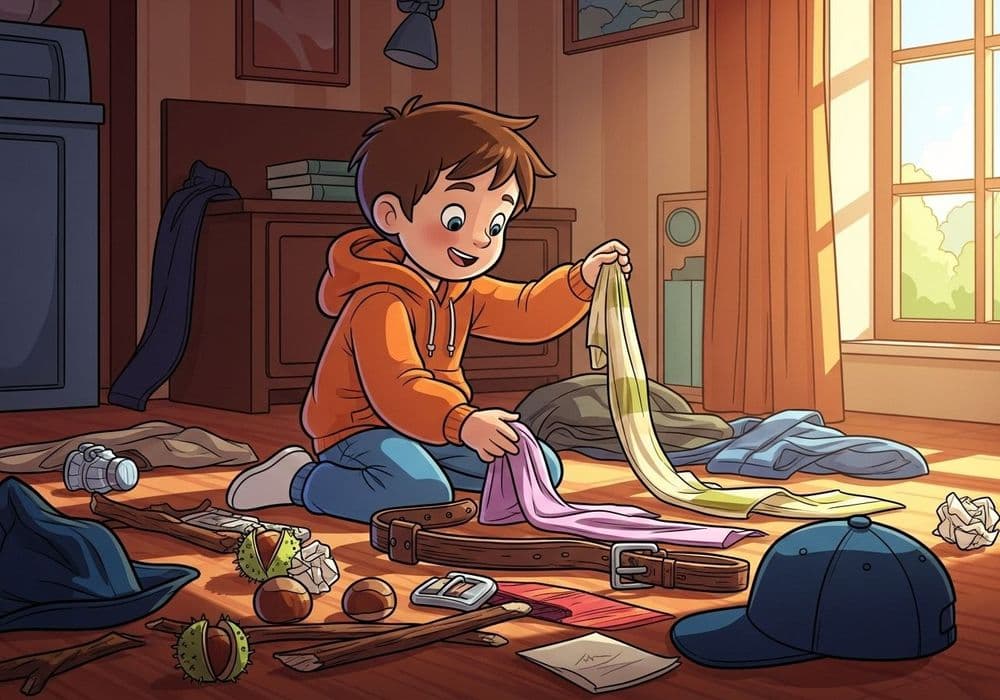
When a child picks up a stick, it may become a thermometer, a telescope, a spoon, or a pencil – while still remaining a stick at the same time.
What is especially interesting is that the child holds this duality simultaneously: they act with the stick as if it were a spoon, while still understanding that it is a stick.
As one psychologist put it:
“A child quite seriously feeds a doll a sand pie, but would be very surprised – even frightened – if the doll suddenly opened its mouth and took a bite.”
Holding together both realities – the real and the symbolic – is quite difficult. That is why play is considered such a complex form of activity.
Secondly, play is where initiative appears and develops.
The child creates new turns in the plot, new events, new meanings connected with their wishes and experiences.
If there is no initiative in the activity – for example, when adults completely prescribe the scenario – then it is no longer truly play.
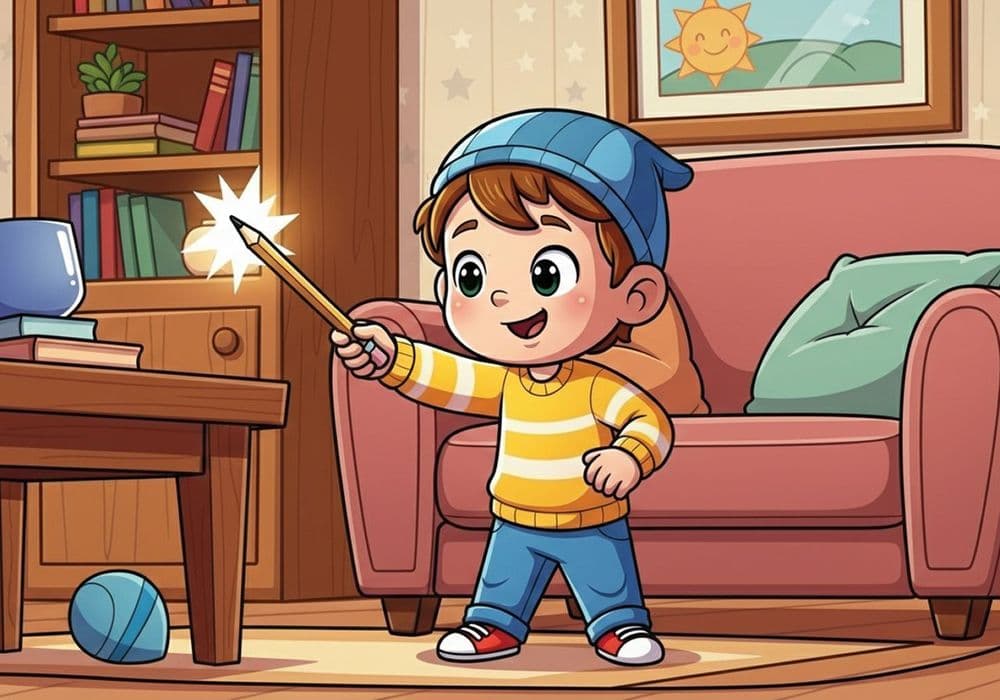
The presence of an imaginary situation and children’s initiative are the two most important characteristics of play.
Together, they make play a space of:
“Play is just entertainment, not real work”
Play often looks unserious: the child pretends, fantasises, says strange things, acts “as if.”
Because of this, play may seem like merely a break between “real” activities.
In reality:
It is precisely in play that the child first becomes the subject of activity:
they create meanings, roles, rules, and events themselves.
Play is not a break from development.
It is the form through which the child learns to:
Without play, neither creativity nor independent thinking can fully develop.
“If a child plays too much, they will be less prepared for school”
This myth comes from anxiety:
what if play distracts from learning?
In reality:
Play and learning are not opposites.
In play, children develop the very foundations that make learning possible:
If play is displaced too early, a child may know letters and numbers but still struggle to learn:
it becomes difficult to focus, set goals, or sustain effort.
Play does not interfere with learning –
it creates its psychological foundation.
“Fantasy and play are lies that children should grow out of”
Adults are often worried when children “make things up,” “distort reality,” or insist on things that “did not really happen.”
In reality:
Fantasy in play is not deception – it is the work of imagination.
The child experiments with separating reality from fiction and learns to work with images, meanings, and emotions.
When adults too early insist on “telling only the truth” and “not inventing things,” they deprive the child of one of the most important tools of development.
The ability to imagine is the foundation of future:
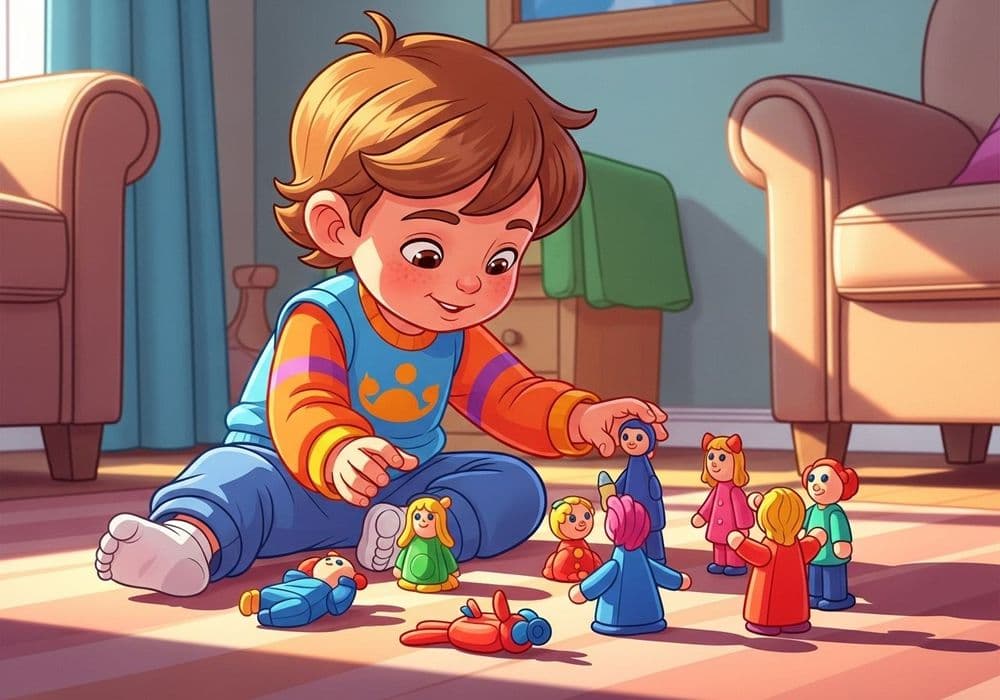
Director’s play is a form of play in which the child acts with characters and for the characters.
Sometimes these are small figures; sometimes they are ordinary objects – buttons, blocks, pinecones – that become the heroes of the play in the child’s hands.
Let us recall Lev Kassil’s once-famous book Conduit and Shvambrania, where the creation of an imaginary world begins when the father’s chess pieces turn into characters.
The first forms of director’s play appear quite early.
Already at the age of two or three, children act as little directors.
At first, there may be no real plot:
the child animates the figures, makes them move and talk.
Yet this is already genuine play, because the child is acting within a “pretend” space.
Later, the first plots begin to emerge.
Interestingly, director’s play reappears in older preschool children at a new developmental level, when the child can no longer merely reproduce isolated actions but can unfold entire plots and worlds.
Developed director’s play includes:
Role-imaginative play focuses primarily on creating an image or character.
The child becomes someone – or something – else.
Sometimes this involves changing voice or movement; sometimes it includes simple attributes and costumes.
For example:
In this kind of play, the child mainly embodies the character’s image: its movements, habits, voice, or temperament.
There may still be no developed plot.
Interestingly, once transformed into a rabbit or a car, a child may continue moving or sounding like that character for a long time without becoming bored – because they remain inside the “as if” space.
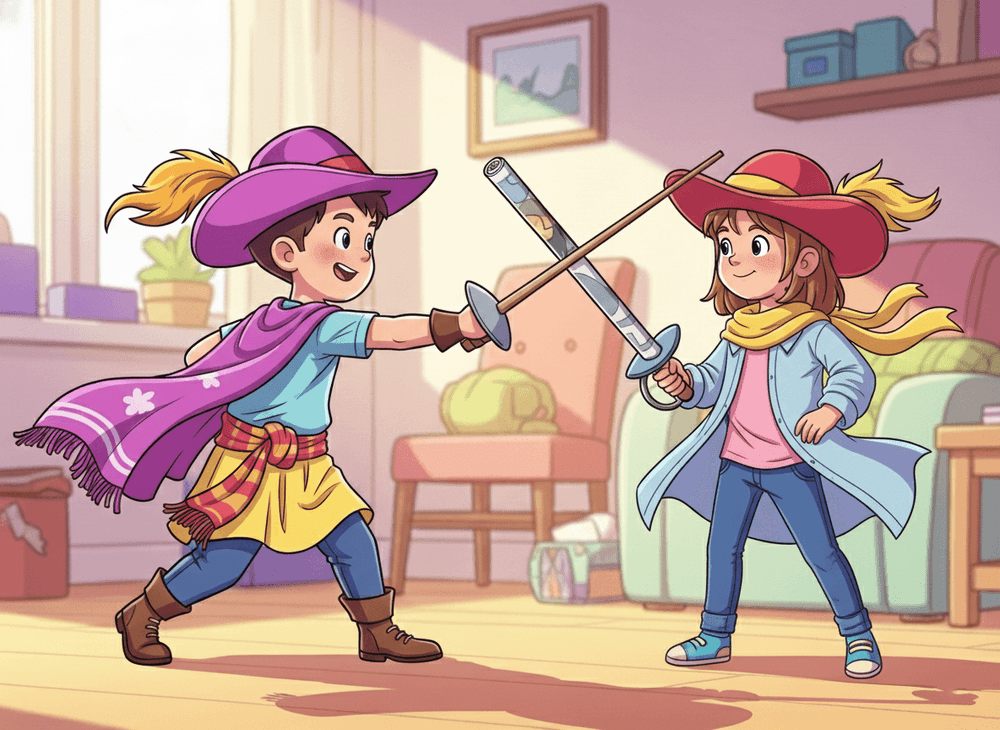
Socio-dramatic play already includes:
In socio-dramatic play, complex plots may unfold over long periods of time.
But even short and repetitive plots remain deeply important, because through them children express, transform, and work through their experiences and emotions.
Games with rules are games in which the child’s behaviour is limited by predefined rules and conditions rather than by a freely developing plot.
Such games are an important means of developing:
In these games, children learn to:
Psychologists sometimes call play the “ninth wave” of child development.
This means that within play – despite its apparent unseriousness – many abilities essential for later development, school success, and life are formed.
In play, children experience joy and freedom.
At the same time – and precisely because of this freedom – the developmental achievements needed for later stages of life begin to emerge.
In play, children can live through their feelings.
They create an imaginary world in which events may unfold differently from reality.
For example: if a child was frightened by a doctor in real life, in play the child may become the doctor and treat sick toy animals. In this way, fear can be experienced, transformed, and overcome.
Within play, the child may become:
Through this, children try out different positions and identities.
Play allows a child to move from feeling weak or vulnerable to becoming someone who acts, protects, and decides.
This is invaluable for emotional development and the emergence of agency.
Play strongly develops self-regulation – the ability to control one’s actions and follow rules.
In play, children willingly follow quite difficult rules.
For example: a child may squat and jump like a frog for a long time, joyfully overcoming physical difficulty because the action has meaning within the game.
A child playing hide-and-seek may sit silently under a table, holding their breath with remarkable self-control – something very difficult in ordinary life.
Self-regulation is critically important for development and for future school readiness, where children must learn to manage impulses and sustain attention.
In play, children follow rules that they themselves have created.
This means that play unites:
Children learn both to invent rules and to follow them.
Socio-dramatic and director’s play often unfold together with partners.
To sustain shared play, children must negotiate.
Without cooperation, the game may collapse.
Thus, in play children learn to:
Play itself is the creation of imaginary worlds.
The more opportunities children have for such play, the more confidently they create these worlds without fear of “doing it wrong.”
Gradually, children move from copying everyday situations toward:
Within play, children constantly encounter contradictions that must be resolved together.
This is where dialectical thinking begins to develop.
We suggest using this checklist to notice what kind of play predominates in a child’s activity and, at the same time, to understand the level of its development. Mark what you observe most often. The goal is not to “evaluate the child,” but to see how play is developing and what is already present within it.
Is this really play?
Mark if you observe the following:
If these elements are absent, it is most likely not play, but simply actions with objects.
What type of play predominates?
Mark what you observe most often.
Different types of play are not “better” or “worse” – they are different forms of play.
How developed is the play?
Level 1. Emerging play
This is normal – it is the beginning stage of play development.
Level 2. Developing play
At this level imagination, self-regulation, and communication are actively developing.
Level 3. Developed play
This is a high level of play development – initiative, thinking, and agency are actively forming here.
In the last decade, people have spoken so often about the importance of play that it seems almost obvious. Yet in reality, the value of play continues to be underestimated.
Adults very often prefer to enroll children in various “developmental activities,” while time for play remains only “what is left over.”
The same pattern exists in preschools: children often have almost no time left for free play because all their time is occupied by lessons and organised activities.
This happens because of the illusion that children develop only when adults organise learning and the child sits “studying” under adult direction.
Adults continue to underestimate play as a space for the development of initiative and children’s abilities.
At the same time, play itself has become endangered.
There are at least two important reasons for this.
1. Children no longer naturally receive experience of developed play from older children
In the past, this happened naturally in large families and mixed-age neighbourhood groups.
Today, when many families have only one child and mixed-age outdoor groups are disappearing, children often have nowhere to acquire rich play experience.
2. “Developmental classes” leave little time for play
Play is gradually displaced by organised instruction and structured activities.
Space for Play
Play requires space where children can:
It is important that play can sometimes remain unfinished rather than being immediately cleaned away.
If play can continue over time, longer and more developed storylines are more likely to emerge.
It is especially important that children can organise the space according to their own play intentions.
Time for Play
Research suggests that children often need at least twenty-five minutes simply to “enter” into deep play.
We must remember that play includes:
Children therefore need:
Materials for Play
Especially valuable materials include:
These help children:
If children try to make toys or props for their games, this should be supported – because they are following their own imaginative intentions.
Play Partners
Partners are especially important for socio-dramatic play.
These may include:
Mixed-age play is valuable for everyone:
Both gain opportunities for decentration – the ability to see situations through another person’s perspective and understand others’ feelings and intentions.
Everyone benefits from mixed-age play.
Adult Participation in Play
First of all, adults should avoid destroying play.
The main principle here is: “Do no harm.”
Inappropriate questions or didactic interventions (“Let’s count the dolls!”) can interrupt play.
If adults take initiative away from children, the activity stops being genuine play.
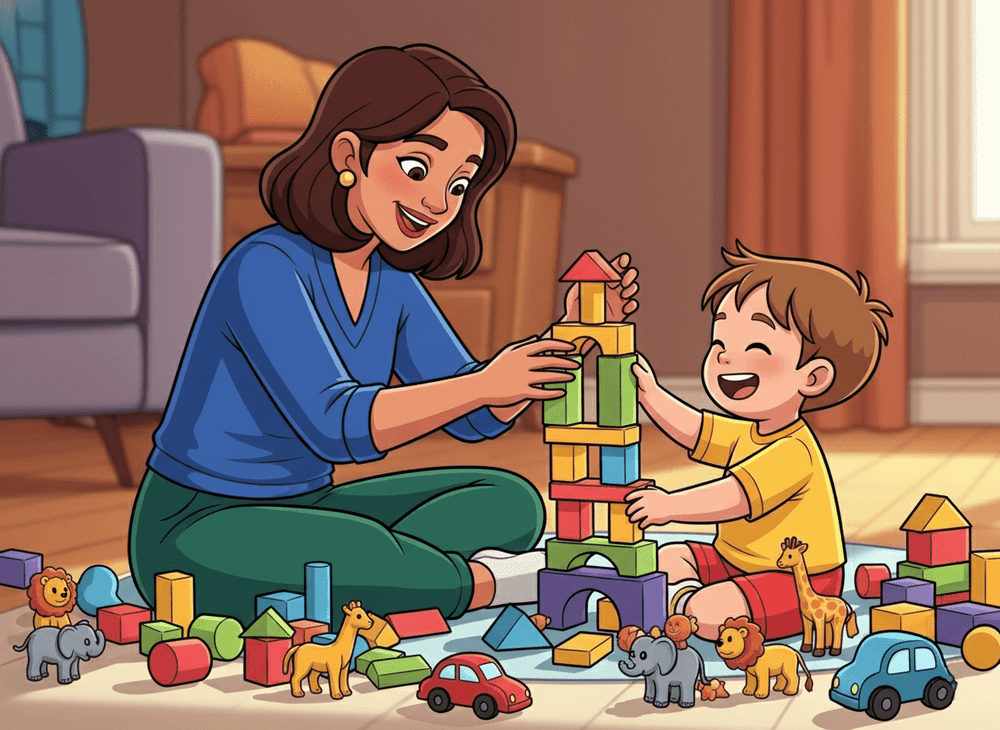
At the same time, adult participation can become extremely valuable.
Adults can support play in several ways:
Shared reading is especially important because literary characters often enter children’s play directly or inspire entirely new worlds and heroes.
When adults participate directly in play, it is important that the initiative still remains with the child.
The adult should enter the storyline already unfolding rather than taking control.
However, when play seems “stuck,” adults can gently “add fuel to the fire of imagination” by introducing a problem or asking:
“What if…?”
Adult participation in play is not obligatory.
If it feels difficult or unnatural, it is enough to ensure that the other conditions for play are present.
That alone is already a great deal.
Shared activities can also include:
My 3–4-year-old daughter constantly "becomes a kitten" or a "princess." Is it normal that there is no plot?
Yes. This is role-imaginative play.
At first, children master the image itself: how to move, speak, sound, and behave like the character.
The storyline usually appears later.
This is an essential step toward more complex forms of play.
My 4–5-year-old plays, but repeats the same storyline all the time. Is that bad?
First, it is worth looking more carefully.
Sometimes the overall theme remains the same (for example, adventures on the road), while the actual content changes: sometimes it is a chase, sometimes one car helping another, sometimes visiting friends, or escaping danger.
Second, if the exact same storyline truly repeats, this may be the child’s way of processing important experiences and learning to gain control over situations emotionally.
Do children need to be taught how to play?
Not directly.
But it is very important to create conditions for play.
Children need:
A playful adult can also support play development if the adult joins as a partner rather than taking over the initiative.
Sometimes adults can gently “add fuel to the fire” of play by introducing a problem or unexpected situation that helps the storyline continue.
I try to play with my child, but I don’t know what to do. Am I ruining everything?
You do not have to be a “perfect play partner.”
The most important things are:
Sometimes the best thing you can do is simply stay nearby and observe with interest.
We bought many toys, but the child still doesn’t play. Why?
Play depends not on toys themselves, but on:
Very often, the following work better than expensive toys:
Because children can transform them into anything.
My child only likes games with rules (for example, board games). Is that normal?
Yes, but it is important that imaginative play is present as well.
Games with rules help develop:
But it is specifically pretend play (role play, director’s play, socio-dramatic play) that develops:
Ideally, children should experience both kinds of play.
If a child does not play, is that a reason to worry?
Sometimes yes – it can be a signal.
But first of all, it is important to look at whether the child actually has opportunities for play:
The goal is not to “make the child play,” but to create supportive conditions and gently encourage play.
Does play really influence school readiness? Or is that exaggerated?
Yes, it does influence school readiness.
Research shows that developed play is associated with:
It is very important that children have rich play experiences during the preschool years.
We almost have no time for play. Is that critical?
Yes. Time is one of the key conditions for play development.
If all of a child’s time is occupied by various “developmental classes,” it is worth reconsidering priorities.
Play is the leading activity of the preschool years.
This means that many of the most important developmental abilities form most intensively through play.
In particular, play strongly supports the development of:
Play time should never be treated as “extra” or unnecessary.