Introductory video for this article — we recommend watching before reading
Dialectical thinking is a special form of thinking connected with creativity and development.
Dialectical thinking helps a person:
Dialectical thinking makes a person flexible, open, and alive.
It allows us to see the world in development – not as a set of fixed forms, but as a space of transformation and creativity.
Dialectical actions are universal tools of thought: they can be found both in real scientific discoveries and inventions, and in fairy tales.
Fairy tales are especially useful for showing how dialectical thinking works.
Importantly, these same mental actions are also needed for solving scientific and communicative problems.
1. Transformation: From Static to Dynamic – Discovering the Opposite
Scientific discoveries and inventions:
Galileo’s transition from the geocentric to the heliocentric model of the universe; Lobachevsky’s creation of non-Euclidean geometry through rejecting one of Euclid’s axioms.
Fairy tales:
The frog is actually a princess; a timid hero becomes brave.
This is the foundation of any understanding of development.
2. Uniting Opposites: Learning to See Complexity
Scientific discoveries and inventions:
The recognition of adolescence in psychology as a period that combines both “childhood” and “adulthood.”
Fairy tales:
Winnie-the-Pooh is both clever and foolish at the same time: his head is full of sawdust, yet he often comes up with wise solutions.
3. Mediation: Escaping the Dilemma by Finding Something That Unites Opposites
Scientific discoveries and inventions:
Einstein’s quantum theory of light, according to which light is both a particle and a wave.
Fairy tales:
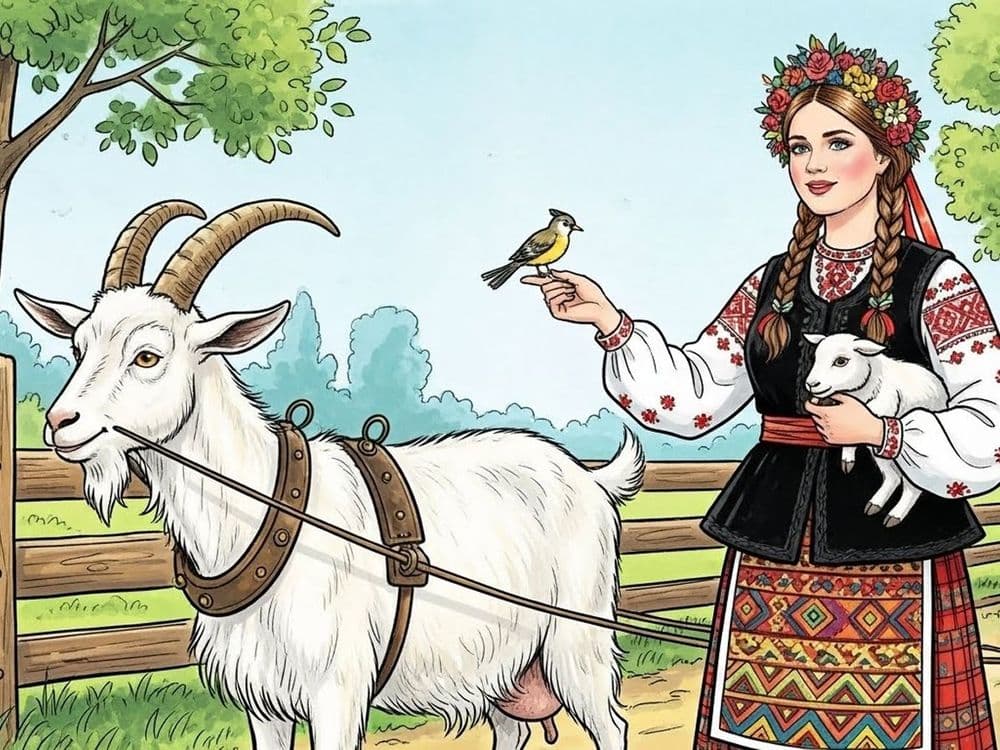
In many folk tales, the hero must arrive both walking and riding at the same time. In one version, the heroine rides on a hare; in another, she walks with one foot while pushing herself forward with the other while still sitting on the hare. She must come both dressed and undressed – and appears wrapped in a fishing net.
This is the ability to find unexpected solutions.
4. Reversal: What Seemed to Be the Cause Becomes the Effect – and Vice Versa
Scientific discoveries and inventions:
The emergence of the idea of radar is not the observer capturing a signal from a moving object, but rather the opposite – sending a signal from the observer to the object.
Fairy tales:
In the tale The Name, the hero’s reputation (“seven at one blow”) becomes the cause of how others behave toward him, although usually a name is understood as the result of someone’s actions.
5. Closure: Moving Forward Leads Back to the Starting Point – But on a Different Level
Scientific discoveries and inventions:
The idea of vaccination, in which a healthy person, having suffered a mild form of a disease, gains increased resistance to it, acquiring a new quality of health.
Fairy tales:
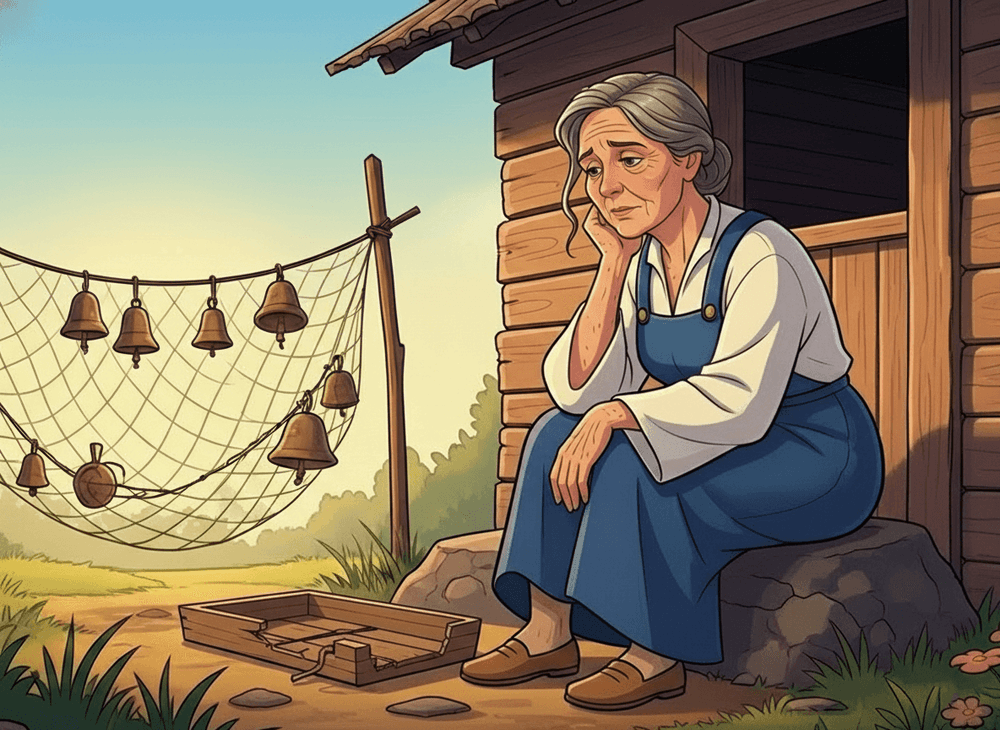
Movement forward leads back to the starting point - but at a different level. In Grimm’s “The Fisherman and His Wife”, the growth of desires leads to collapse and return to the beginning. This is an understanding of cycles and limits.
6. Changing the Alternative
Scientific discoveries and inventions:
Psychologist Lev Vygotsky, defining the subject of research in his work “The Psychology of Art,” moves from the alternative “author or reader” to the alternative “subject (author, reader) or work of art.”
Fairy tales:
In “The Gingerbread Man,” it is not size but cunning that matters.
People often think that dialectical thinking is “too early” and “too difficult” for preschool children
In fact, preschoolers are natural researchers of transformation: they see snow becoming water, day turning into night, a seed becoming a sprout.
People often think that dialectical thinking develops through explanations and special “logic lessons”
However, children grasp the logic of development through action, not through lectures – while modelling, observing, playing, asking questions, arguing, and wondering.
People often think that the adult’s task is to “protect the child from contradictions” (because contradictions seem disturbing), to explain everything quickly and “correct” paradoxes.
In reality, the opposite is true: it is precisely the encounter with contradictions and the search for answers to “How can it be both this and that?” that makes thinking alive.
People often think that development is a smooth and gradual process
In fact, development is always connected with inner tension and the search for a new way of thinking.
Complex questions are not always comfortable.
Therefore, the most important thing a parent can do is not simplify the world for the child, but help the child tolerate complexity and discover within it meaning, joy, and the excitement of discovery.
A difficult question is interesting.
In today’s complex and rapidly changing world, it is impossible to manage without dialectical thinking – the kind of thinking that helps us understand and anticipate development and resolve contradictions.
The development of dialectical thinking is important for:
The Development of Agency
Dialectical thinking helps a person become the author of their own life.
When a child learns to notice contradictions and does not run away from them, but instead searches for their own solution, they stop being someone who merely reacts to circumstances.
The child begins to:
Dialectical thinking gives the child an inner sense of support: the world does not provide only one ready-made answer – the child can construct one.
Communication: Realising One’s Own Intentions While Preserving the Interests of Others
In communication, children constantly encounter opposing positions:
“I want it this way” – “I want it differently.”
If thinking is purely formal and logical, there is only one solution: someone must give in.
Dialectical thinking opens another possibility:
Communication then becomes not a struggle, but a shared search.
The child learns:
Inventiveness: The Ability to Create Something New
Every invention begins with a contradiction:
Formal logic forces us to choose only one side.
Dialectical thinking allows a person to:
That is why dialectical thinking lies at the heart of creativity:
it helps us not merely improve what already exists, but create what did not exist before.
Dialectical thinking helps us not fear uncertainty, but see it as a space of possibilities.
The First Seeds of Dialectical Thinking in Young Children
Yes, it may seem surprising, but children already possess the first seeds of dialectical thinking – and these can disappear without adult support.
Children as Observers
Children often notice change before adults do.
The snow has melted – wonder and delight.
A piece of modelling clay has become a “pancake” – excitement.
Children naturally experience the world as alive, changing, and constantly moving.
Little “Why?” Researchers
Children notice contradictions and inconsistencies and ask: how can that be?
Listen to these real questions overheard from children:
Share with us if your child asks questions like these too.
Peacemakers and Negotiators
Yes, such solutions may sound less spectacular than scientific inventions or business innovations, but structurally they are genuinely dialectical solutions – and therefore manifestations of dialectical thinking.
Here is an example shared by the parent of two preschool sisters:
The children came to sort something out.
One wanted to play “mum and baby,” while the older one wanted to play a board game.
Since supporting one child would upset the other, I started hesitating, hoping one of them would change their mind:
“You see, if one person doesn’t want to play the board game, the other can’t really play alone. But if one person doesn’t want to play mum and baby, you can’t force them either...”
Then Sasha (aged 5 years 3 months) said:
“Let’s do this: Veronika will be the dad, I’ll be the baby, Dad will be the mum, and this family will play the board game.”
Thoughtful Readers
Children’s literature is full of ambivalent characters who combine opposites:
Such characters are especially fascinating to children.
Children as Inventors
During experimentation and construction, children do not merely use materials – they transform them in order to realise their ideas.
For example:
These are not mistakes, but brilliant acts of “reversal” – dialectical moves that turn everything upside down.
Children at Play
In genuine play, children constantly hold opposites together:
For example:
Two girls are playing princesses. Both are dressed appropriately – wearing capes and crowns.
One says to the other:
“Let’s pretend we flew somewhere and a dragon attacked us!”
“Okay!”
“But what will we fly on?”
“Let’s pretend this is a rocket,” – she says, pointing to a long cushion roll.
Immediately they sit on the cushion and begin humming, imitating the sound of a rocket.
It is clear that the girls exist simultaneously in both real and imaginary space.
Children Are Natural Dialecticians
But for this capacity not to disappear – and instead become the basis of future creative thinking – adults need to help children notice meaning in these transformations and feel that behind every phenomenon there is a story:
something was, something became, and something may still become.
It is precisely this understanding that makes a child flexible, resilient, capable of adapting to change, and able to create something new.
This checklist is not for evaluating development, but for helping you notice what is already there. Sometimes it is enough simply to think: “Oh – that’s it!”
Does your child notice changes and transformations?
Sometimes you may notice that your child:
These are the first signs of understanding that the world is not static, but constantly changing.
Does your child notice oddities and contradictions?
You may hear:
This is not just curiosity – it is an attempt to hold together contradiction.
Does your child try to combine incompatible things?
Sometimes a child:
This is already a genuine step toward dialectical thinking: both/and rather than either/or.
Does your child notice duality in people and characters?
You may notice that your child:
This is the ability to see the unity of opposites.
Does your child invent unusual solutions?
In play or everyday life, the child:
These are manifestations of transformation and mediation.
Is there “dual subjectivity” in play?
In play, you may notice that the child:
This is a very important manifestation: holding two realities at once.
Can your child “turn a situation upside down”?
Sometimes a child:
This is the dialectical action of reversal.
Does your child try to find their own solutions in difficult situations?
In communication or play, the child:
This is the beginning of agency and creative thinking.
If a child has opportunities for these activities, you are already contributing to the development of dialectical thinking.
Processes of change and development happen around us constantly. Life itself can become a source of creative thinking.
A person who learns to notice change understands that the world is dynamic – and therefore becomes capable of creating change as well.
It is important for children to have sensory experiences:
to see and touch changing objects.
Then they become interested in discussing them.
A child can observe development in situations such as these:
1. Where living things grow and change
Plant seeds, greens, or beans in a jar and observe them every day.
Discuss:
“What was it like yesterday? What changed today?”
The important thing is not the final result, but the process itself:
the appearance of the sprout, changes in shape and colour.
2. Where people change – including the child and their loved ones
Look together at old photographs:
your own, the child’s, or other family members’.
Compare:
– “What were you like when you were little?”
– “What couldn’t you do then that you can do now?”
– “How has Grandma / Dad / I changed?”
You can discuss not only appearance, but also abilities, habits, and character:
“You used to be afraid, but now you’re not,”
“At first you couldn’t do it, but then you learned.”
This helps the child feel something very important:
development happens within them too – they are not “simply this way,” but changing, growing, becoming different.
3. Where animals and their behaviour change
This may involve a pet or observations in a park or zoo.
Notice together:
– how a puppy grows
– how adult animals differ from their babies
– how different an egg is from the creature that hatches from it, or a caterpillar from a butterfly
The child begins to understand:
development is not only “growing bigger,” but becoming something different.
4. Where something is being built or created
Observe building work, repairs, furniture assembly, or cooking.
Ask questions:
“What did this become?”
“How was it made, step by step?”
This helps children see that every finished thing is the result of a process.
5. When it becomes visible how things and the world change over time
Visit a museum (of technology, transport, or everyday life), or simply look at old photographs.
Compare:
– before and now
– what was and what became
The child begins to understand:
the world develops – it does not remain the same.
6. While observing cyclical processes
Time is cyclical:
all calendars are based on repetition – daily, seasonal, yearly, and other cycles do not merely replace one another, but return again.
Here it is interesting not only to notice change, but also similarity and reversibility.
Observe everyday transformations:
– snow → water → ice
Discuss: can ice turn back into snow?
Explore the calendar:
– day → evening → night
– spring → summer → autumn → winter
Discuss:
“Is this spring the same spring as last year, or a different one? Why?”
“Is spring more like summer or more like winter? Why?”
In these situations, the important thing is not to explain, but to notice together:
“Look – it used to be one thing, now it has become another.”
“I wonder what will happen next?”
This is how children gradually develop a sense that the world is not fixed and unchanging, but a space of transformations and becoming.
If you already have a tradition of reasoning together, then “dialectical” questions can naturally become part of your conversations.
Below are different types of questions and some examples. But you can create such questions around any topic that interests both you and your child – especially if it connects to the kinds of experiences discussed earlier.
What matters most is that this should not feel like a lesson, but like an exciting shared investigation and conversation.
Try to be not a teacher-controller, but a conversational partner and fellow explorer searching for solutions together. Only then will it become a genuine intellectual adventure for the child as well.
Questions About Anticipation
Learning to imagine how a situation or phenomenon might change – and exploring different possibilities.
For example:
– “How will the fairy tale end? What different endings are possible?” (Questions like this can be asked while reading almost any story.)
– “What will telephones be like in 100 years? What about nursery schools? Or cars? How will they be similar to today’s versions, and how will they differ? Let’s each draw our own version and compare them!”

– “What will you be when you grow up? What different possibilities are there?”
– “Let’s invent a story about a person going on a journey. Can you think of three different ways the story could develop? Draw and tell them.” (Or: “Let’s each invent two versions and compare them.”)
– “Who could hatch from an egg?” (Who can think of the most answers?)
– Look together at family photographs: What was the child like when he was young? Can the child recognise parents, grandparents, or themselves in childhood photographs? How was clothing different? The dishes? The cars?

– “What could an unusual car be like?” (or “a car upside down / backwards”)
– “What could an unusual table be like?” (or “a table upside down / backwards”)
– “What could an unusual house be like?” (or “a house upside down / backwards”)
Questions About Reconstructing the Past
It is important for children to imagine what familiar things, objects, or living beings used to be like in the past.
Explore together what telephones, cars, or televisions looked like several decades ago.
Discuss:
– What are the differences?
– What were the advantages and disadvantages of older models?
– Is a modern smartphone still a “telephone,” or does it need a different name?
Look in encyclopaedias at prehistoric ancestors of humans or familiar animals: cats, dogs, birds, crocodiles.
Discuss: “Is a prehistoric elephant already an elephant, or a different animal?”
Questions About Ambiguous Situations (Holding Opposites Together)

All these questions have one thing in common:
they cannot be answered unambiguously.
There are arguments both for and against.
People naturally tend to avoid this duality and reduce everything to a single answer – in other words, to simplify.
Discussion helps children make several important discoveries:
But this becomes a real discovery only if an actual discussion takes place.
During conversations about such questions, it is important to listen carefully to the child’s arguments, offer arguments for the opposite position, and then return to the original question:
“So is Winnie-the-Pooh clever or foolish?”
Questions About Synthesising Opposites
Think of 5–6 things that can be simultaneously:
Riddles from the Fairy Tale The Wise Girl
In these tasks, simple non-dialectical solutions usually appear first:
Try together to search for answers where:
Solve such puzzles together with your child – they are an excellent way to develop your own thinking as well.
Questions About Shifting Alternatives
Inventing the Unusual
Imagine:
Each time, discuss:
Inventing Unusual Stories
The following tasks can also be done together with an adult:
The adult draws the beginning and invites the child to invent different middles and endings.
Such tasks help develop flexible and variable thinking.

Isn’t dialectical thinking too difficult for preschool children?
This is one of the most common concerns.
In reality, preschool children are “natural dialecticians”: they naturally notice transformations, ask questions about contradictions, and try to connect things that seem incompatible.
The problem is not that this is too difficult for children. The problem is that without adult support, these abilities may fail to develop and gradually disappear.
That is why it is important not to “teach something difficult,” but to notice and support what is already present in the child.
Do we need to explicitly teach children how to “think correctly”?
No.
Dialectical thinking does not develop through explanations or “logic lessons.”
Children develop it through action: when they play, observe, ask questions, argue, and invent solutions.
Your role is not to explain, but to join the child in shared reasoning: to ask questions, help them notice different sides of a situation, and avoid rushing to provide ready-made answers.
Isn’t it harmful for children to encounter contradictions? Wouldn’t it be better to explain everything immediately?
On the contrary.
Encountering contradictions and trying to understand “how something can be both this and that” is exactly what drives thinking forward.
If everything is simplified and quickly “explained away,” children get used to searching for one correct answer.
But if you help them tolerate complexity, discuss different possibilities, and search for connections between them, they learn to think more deeply and flexibly – and become capable of finding new solutions.