![[EN] CHILD LAB](https://childlab.co.uk/wp-content/uploads/sites/4/2026/01/child-lab-logo.jpg)
What Is Imagination?
Imagination: Cognition and Creativity
Yes, imagination is one of the cognitive processes (like perception, thinking, or memory), that is, its task is the reflection of reality. However, while thinking, for example, analyses, compares, generalizes, singles out what is essential, assigns phenomena to categories, or resolves contradictions, imagination operates in a completely different way.
A person turns to imagination when two circumstances coincide.
First, when what is being apprehended is so complex and vast that it is difficult to approach it with the tools of thinking (or with the tools of thinking alone). For example, when we are dealing with feelings—love, fear, or grief—or with relationships—to another person, to death, or to separation.
Second, when this phenomenon is connected with a human desire that seems unattainable, and where thinking appears powerless for the time being. For example, a person wants to meet loved ones despite distance, wants to overcome death, wants to gain mastery over a force that is still uncontrollable.
Everything begins with an experience in relation to a reality that is difficult for a person to comprehend and contain—this may be a specific situation, a conflict, or existential questions of life and death. And when a person encounters something vast that simultaneously touches upon their desires, a need arises to express one’s understanding—so far only the sense—and one’s attitude toward it.
At this point, the only possible means becomes precisely the image of imagination: the expression of the sense of a phenomenon through another phenomenon, its symbol. The symbol, as it were, answers the question: “How can I express the sense of a complex and significant phenomenon for me through something else?” A symbol is always something concrete, possessing sensory characteristics—a plot or a form, a composition or a colour, a sound or a taste. It reflects the object not analytically, but figuratively: it “grasps” the sense of the object while simultaneously expressing a person’s attitude toward it. That is why the imagined world, unlike an analytical and emotionally neutral reflection, is always emotionally charged.
A symbol is an object through which another sense shines through. Thus, a pencil in a play turns into a thermometer—and the entire play reflects the sense of a child’s anxious and important visit to the doctor; and a story about little rabbits, invented or played out by a child, reflects in symbolic form the child’s relationships with significant people.
When it comes to a complex phenomenon, imagination reveals its sense even before analysis becomes possible. When it comes to a desire that is still unattainable, an imagination creates an anticipation of a solution—again, its sense—before a real invention becomes possible.
Imagination is the capacity “to endow with an image—to ‘im-age’—and to make accessible to others that non-image-based, inner, emotionally and value-laden core of a future work, which at first lives only in the soul of the artist, great or small” (A. A. Melik-Pashayev).
The “Formula” of Imagination
Imagination become a kind of magical crystal through which a person looks at the vast world, and remarkably, this crystal does not obscure what is being observed but reveals its essence. Imagination is the possibility of grasping the general sense of a situation (and sense is always personal, sense “for me”) through something concrete and sensory.
This is how metaphors, children’s play, and children’s artistic creativity are structured, creativity that gradually separates from play.
What Is Not Imagination
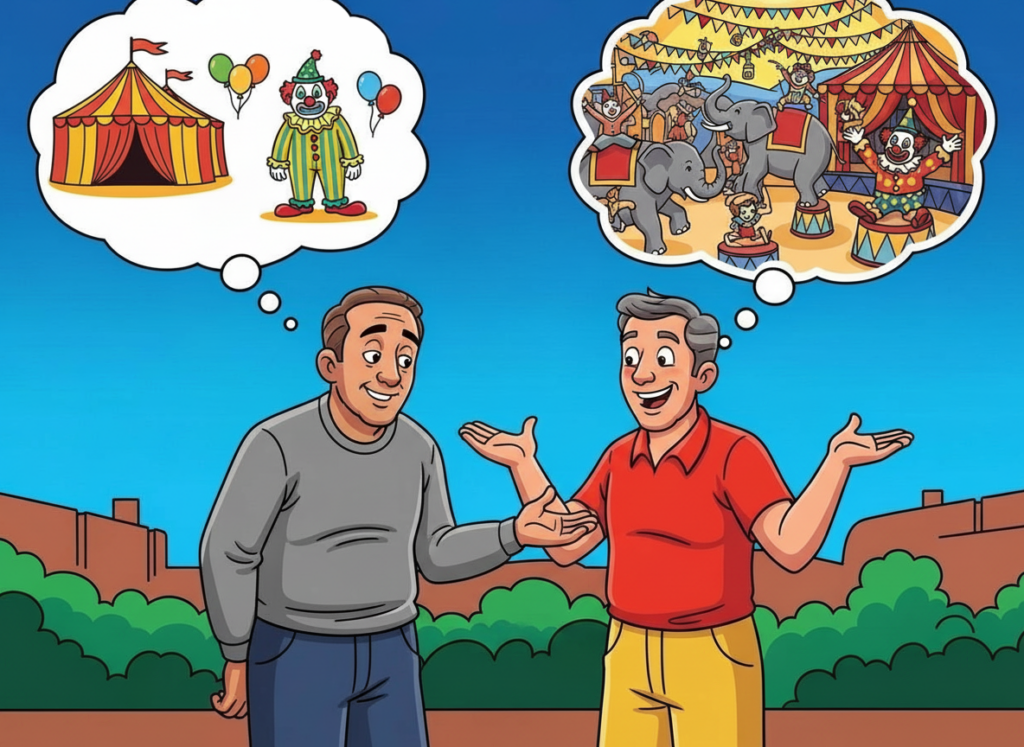
Often, when describing a situation to someone, we say: “Use your imagination,” sense imagine everything “in vivid colours.” If your friend has been to the circus and tells you about it, you will try, based on their account, to imagine how brightly lit the arena was and how bravely the animal trainer behaved—in other words, to complete what you yourself did not see. And as often happens, what you imagine will differ from what your friend actually saw—sense that you introduce something of your own into the created image.
And yet, in this case, we are not solving the task of imagination proper, but rather the task of reconstruction, of reproduction. Here it is more accurate to speak of the creation of a mental representation, which enriches dry words with sensory, concrete details and helps to understand the interlocutor.
“Liberation” of Imagination
Thus, two “players” always participate in the creation of an imaginative image: that which is being understood, and that through which it is understood—that is, the phenomenon and its symbol.
Let us consider how imagination works using the example of children’s play. At first, a child’s imagination is entirely determined by the objects that surround them, and the child can take only a small step into the imaginative field: if there is toy tea ware, a “tea party” begins; if there are blocks, a house is built. These, too, are images: in such play, the child also reflects what is senseful to them—everyday situations of meeting and parting with loved ones—yet what proves decisive is what the symbolic objects themselves “suggest.” In a certain sense, here “the tail wags the dog.”
However, as imagination develops, the child acquires the ability to detach from objects and to construct complex imaginary worlds in relation to what they are experiencing most acutely now. Thus, imagination becomes free from the visible field: a new, holistic imagined situation emerges, and it itself determines how surrounding objects will be incorporated into it. In this case, a saucer can turn into a magic pill that transforms a dragon into a human, or into a flying saucer on which aliens have arrived.
This position, as it were, raises a person above the situation (and is therefore called supra-situational): it gives independence from specific objects. Moreover, later imagination may not rely on concrete objects at all: imagined worlds can be built entirely in inner space, and sometimes it is even difficult for an adult to understand that a child is playing, although the child is constructing holistis of unprecedented situations.
Thus, the degree to which imagination is developed or undeveloped can be determined by how free a person is in creating an image.
The “Realism” of Imagination: Imagination as Cognition and Creativity
There is a well-known distinction between “discoveries” and “inventions” (there is even a fixed expression: “committee for discoveries and inventions”). It is assumed that a discovery is the cognition of something that already existed, while an invention is the creation of something new and unprecedented. However, when it comes to imagination, the boundary between discoveries and inventions ceases to be so unambiguous.
“At the basis of creativity there is always a lack of adaptation, from which needs, aspirations, or desires arise,” writes Lev Vygotsky. Imagination not only reflect what exists, but also create what is not yet possible, but is desired. Thus, imagination creates new possibilities for already existing objects and phenomena.
Those who consider imagination to be mere “fantasy” understand reality in a flat way—as something that already exists once and for all. But reality is not only dynamic; it also changes through human creativity. Images of imagination reveal the possibilities of reality, the perspectives of its development. This is the realism of imagination—the realism of a world that is coming into being, that is developing.
Let us consider an example: it clearly shows how imagination not only reflects what is given but also creates new possibilities.
Myths About Imagination
Imagination is the most mysterious of the cognitive processes. In fact, its paradox already sounds in this very formulation. Is imagination really a way of knowing the existing world, rather than inventing a non-existent one? After all, for cognition we have sensations, perception, thinking, memory, finally. And imagination is most often perceived as something good and important, but precisely “for children.”
Moreover, it is surrounded by myths that make people treat it with a certain caution.
Myth 1: imagination is merely fantasizing; it gives nothing to the cognition of the world
In general, imagination seems close to irresponsible daydreaming and even to lying. Let us recall Nikolai Nosov’s amusing story The Dreamers: at a certain level of cognitive development, a child may well create a non-existent reality in order to deceive another.
Myth 2: an overly developed imagination is dangerous; it intensifies anxiety
Indeed, an anxious person endowed with imagination may vividly picture all possible consequences of events, including the most unacceptable ones, and thus intensify their anxiety.
As a result, play, stories, and drawings are condescendingly assigned the role of a kind of “shock absorber” in the encounter with reality: it is difficult for a child to come to terms with the non-fulfilment of many desires, and it is good that they can realize them at least in play, in an “as if” mode. But in general, for the future, for the cognition of the world, imagination is considered unnecessary and may even interfere.
To dismantle these myths, it is necessary to understand:
- what role imagination plays in cognition—scientific and artistic—and why neither discoveries nor works of art are possible without it;
- how imagination can be developed and how one can learn to work with it.
Why Does Humanity Need Imagination?
Science and art are two ways of generating the new. Their synthesis defines the uniqueness of the human being as a creature endowed with both affect and intellect.
Imagination and Art as a Way of Cognition
Art is a vast sphere of human activity that may seem excessive to some. The patterns on the minarets of Samarkand amaze with the minuteness of their details. The Gothic spires on the roof of Milan Cathedral are visible only to those who manage to get onto the roof, yet for the master it was important to create them all.
The excessiveness of art is not accidental: in art, deep and general senses emerge through the concreteness of material. The plot of a book, the rhythm and rhymes of a poem, the colour and composition of a painting, the tonality of a melody—all these are material ways of expressing the immaterial: feelings and thoughts. Art is a way of knowing the general through the particular, the whole through the part.
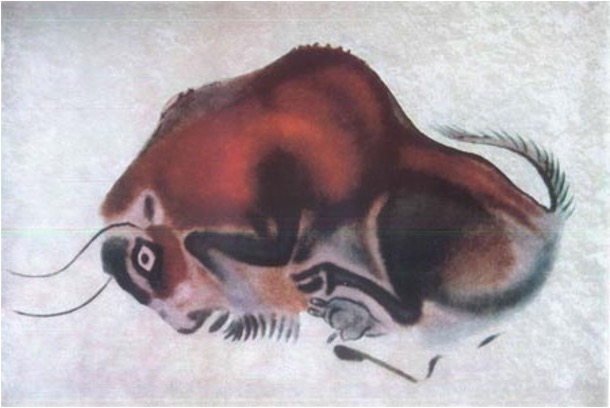
We still do not know why the famous dying bison from the Altamira cave was created, yet many centuries later it continues to impress the modern viewer. The tension arises from the combination of the beauty of the powerful animal and its death, its finitude. And this impression is created by line and colour: it is they that create the symbol, which is read by people of a completely different epoch. Thus, the “excessiveness” of art is only apparent: its means are essential precisely in order to directly convey the most complex reality of the sense of life and death.
The bison from the Altamira cave
Art proves to be an effective way of grasping sense where concepts are not yet sufficient. A noteworthy example is Boris Pasternak, who left philosophy and turned to poetry. His poem “Definition of Poetry,” composed entirely of metaphors and at the same time structurally resembling a definition from a textbook, shows how scientific knowledge falters before the capacity of poetic language to grasp essence.
Picasso’s Guernica or Marc Chagall’s Over the Town are deeply symbolic, yet precisely for this reason they are also deeply realistic, accurately conveying in one case the sense of war, and in the other—the sense of love.
Imagination and the Perception of Art
Today one can simultaneously observe two processes moving in opposite directions. On the one hand, more and more people question the very necessity of art—fiction at contemporary book fairs is being displaced by non-fiction. On the other hand, exhibitions, concerts, museums, and theatrical performances enjoy enormous demand, and this demand is growing.
These processes reflect the paradox of imagination: it opens up vast possibilities as a means of experiencing emotions and transforming the world, yet for certain reasons this means may remain unmastered. In such cases, a person may believe that they “simply” are not interested in art. In this way, however, a person loses the possibility of transforming their own emotions through an encounter with artistic images and remains alone with their experiences.
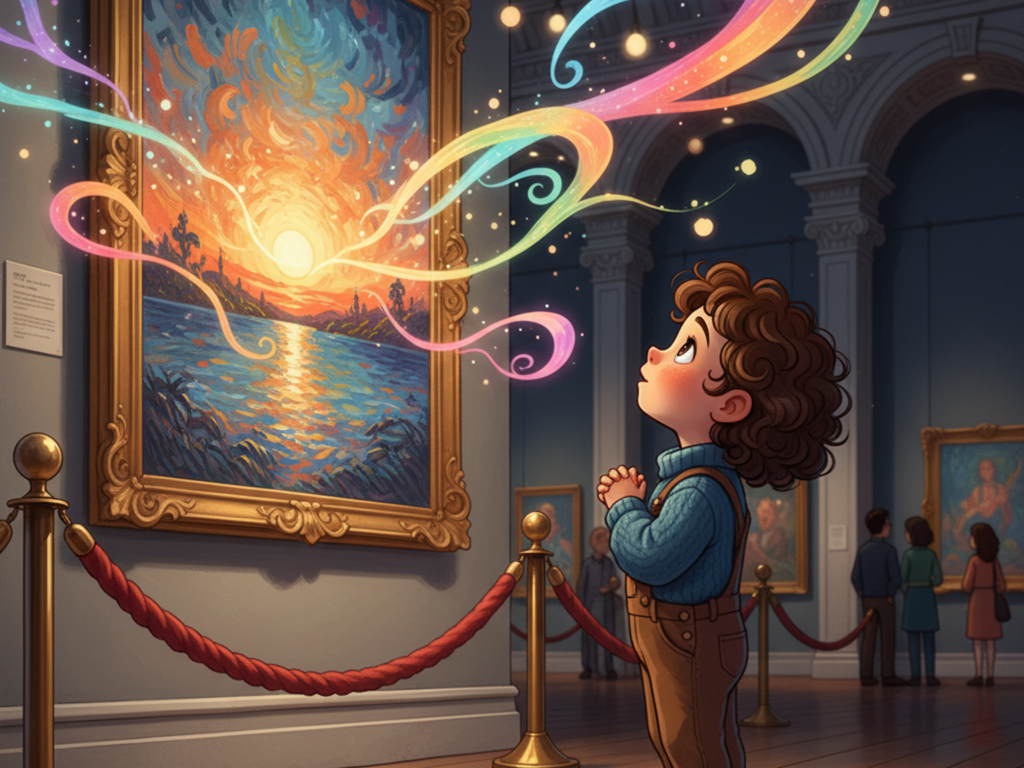
By perceiving texts, music, or paintings created in completely different epochs, a person may experience catharsis—a feeling of liberation and renewal—and thus live through and comprehend their own experiences.
One direction in psychotherapy is even called art therapy: it helps a person restore their connection with art as a means of embodying and processing their experiences. Such restoration is needed when, due to school experience, a person firmly believes that they “cannot draw, sing, compose,” and so on: thus this magical door turns out to be closed. For a child, however, it is open—and it is important for adults to support this childlike capacity to live through joy and sorrow and wonder through play, drawings, songs, and stories.
Imagination and Science
Metaphor also turns out to be important for scientific cognition and invention. Before a problem is conceptually “decomposed” into parts and solved, an intuitive image of its solution arises—a phenomenon repeatedly described by historians of science and memoirists.
Imagination generates the idea of the possible; thinking will later have to elaborate it and turn it into reality. The image itself must arise as an outline of the embodiment of a desire that overcomes what is given.
In Greek mythology, Lynceus—the Argonaut standing at the prow of the ship Argo—can see even through the earth; his gaze penetrates solid bodies, and thanks to this he detects an enemy hiding in the hollow of a tree. The myth researcher Yakov Golosovker writes that “in the image of an eye penetrating solid bodies with vision lies the idea of the X-ray—precisely the idea, not the goal, for myth, so to speak, ‘unconsciously’ anticipates the ideas of future scientific discoveries, but sets no conscious goals. This is foreknowledge, not a prescription of the path.”
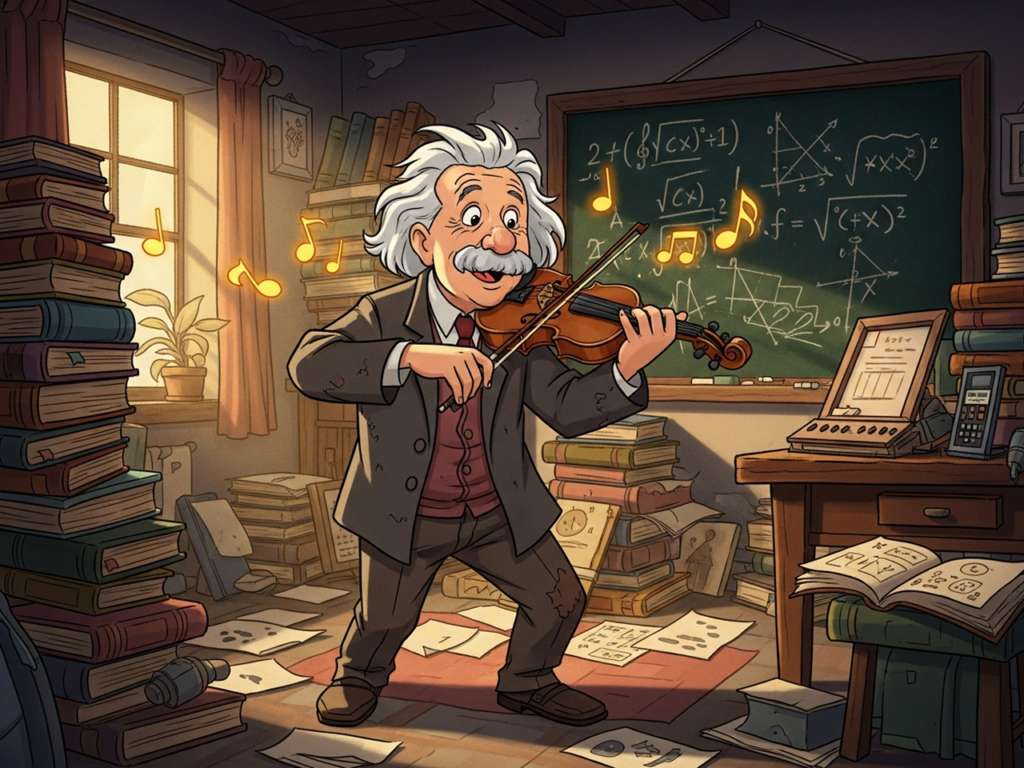
The fact that scientists are often connoisseurs of art is not an amusing paradox, but a regularity. Cognition requires precisely two modes, two languages, two lenses: concept and symbol. Science grasps schemas; imagination, through the symbol, grasps senses. A symbol is an instantaneous path to sense through image and attitude, when the whole is grasped before its parts. A concept clarifies all relations, reveals the schema—the connection of parts within a unified whole.
Imagination in Preschool Age
The Uniqueness of the Preschool Age
The uniqueness of the preschool age lies in the fact that a child, who has not yet mastered many of the norms of human culture, who knows and can do little (for example, does not yet know how to regulate their behaviour and emotions), already possesses all human capacities in an embryonic form. Researchers even speak of the “embryonic all-containing nature” of the preschool age: all future abilities are already present in play, but have not yet been “sorted onto shelves” of authorship, visual creativity, and dance.
Imagination is a symbolic way of melting experiences into play, drawing, and story—a way that is often difficult for adults, but open to children. Children readily express their experiences through play and invention. Thus, a stick becomes a thermometer, or a pen, or a pipe. In imaginative play, a child can even use themselves for transformation. Having seen a powerful construction crane in the street, the toddler himself turns into it and begins to hum, while his arm becomes the crane’s boom.
Gianni Rodari described such a way of inventing: he suggested combining two completely heterogeneous objects and composing a story that would unite them. The more dissimilar the objects, the more interesting the story would be. He called this technique the “binomial of fantasy.” But in fact, imagination always works as a “binomial of fantasy,” because it always connects the unconnectable—the human experience and the concrete images from which a symbol will be built that allows this experience to be reflected.
In the “work of imagination,” two converging lines can be clearly seen: experience seeks an object that could symbolize it, embody it, and at the same time explores the objects of the surrounding world in order to see their potential to “become a symbol” of something else. And it is precisely this ability to transform one’s experiences into play or drawing, while at the same time discovering different possibilities of surrounding things, that determines the “strength” of imagination.
Sometimes it is difficult for a child to detach from the normative sense of an object, and a pebble remains just a pebble or, at best, becomes a cutlet in a play of “mothers and daughters.” But sometimes a child creates a holistic and complex imagined situation in which the pebble becomes part of a larger whole (for example, a magic pill taken in order to become weightless and fly to the Moon). By the end of the preschool age, the child may develop this “supra-situational inner position,” which allows them to create expanded images – plays, stories, or drawings.
The supra-situational inner position frees imagination from the shackles of real objects: now it is no longer imagination that plays by the rules dictated by objects, but objects that play by the rules of the imagined situation. The child takes an important step toward understanding how everything in the surrounding world is interconnected. Complex conceptual constructions are still beyond the child’s reach, but the most important ideas about connections and the wholeness of the world are already taking shape.
What Does Imagination Give the Child?
Imagination and Emotions
It is difficult for a child to manage their desires and experiences when desires are not fulfilled. But the fulfilment of desires can be imagined. Thus arises the entire sphere of imagination and dreaming, which reconciles the child with reality. The child gains the opportunity to make reality commensurate with themselves: they cannot influence the events themselves, but they can reproduce the event in such a way that they themselves become an active agent, rather than someone who passively lives through circumstances.
Imagination allows what a child has seen—events happening to others—to be transformed into something that happened to oneself personally. Children do not remain observers; they want to try everything on themselves, and for this they have the magic wand of imagination. Moreover, the events in which the child becomes the hero may be both desired and frightening. Having seen builders constructing a house, the child turns into a builder or a construction crane. Having seen a caregiver scolding someone in kindergarten, the child turns into the one being scolded—or, more often, into the caregiver herself.
A question may arise: why does a child need to live through unpleasant events? The point is that this is precisely a way of coping with one’s emotions (which are certainly present—fear, anxiety), in order to become not a passive spectator, but the one to whom these events obey. This is already a great deal—in this way, reality is assimilated: from something alien it becomes my action. Even if a traumatic situation is played out several times with all its frightening details, I still control it—and gain the opportunity to live through intense emotions and overcome them.
Of course, there are cases when a situation is so complex that a child becomes “stuck” in it, repeatedly replaying something frightening, as if the work of imagination and experience is stalling. In such cases, it is important to understand how to help the child (this is possible). But it is still important to understand that such living-through is far better than ignoring the experience.
“Creativity releases from confinement not only sadness and sorrow—it gives an outlet to joy. The joy of being, the joy of being who you are,” writes Elena Makarova, a well-known child art therapist.
Imagination and Agency
The development of agency—the readiness to build one’s own behaviour, to be not reactive but active (volitional)—is one of the main vectors of human development and the most important one in the development of a preschool child. It is difficult to overestimate the role of imagination in this.
In play, in an imagined situation, you yourself create a fictional world and determine what will happen in it. Through imagination, a child lives not one life, but many possible ones, trying out different “selves.” Imagination is a space not only of reflection, but also of transformation. One can invent a different course of events—for example, play it out or draw it.
In the imagined space, real action is not only reflected but transformed: this mirror is clearly a magical one. Through this, an image of the desired is created: it is not frightening that the embodiment of desire exists only in imagination for the time being—without this, there will be no real embodiment either.
Imagination makes the first step; thinking will follow in order to solve the problems that arise. But the first step is necessary. And even living through a frightening situation is an important experience, because now the child directs the situation—it arises by their will.
Through this, an image of the desired is created: it is not frightening that the embodiment of desire is still only in imagination—without this, there will be no real embodiment. In play, story, or drawing, a person can construct other possibilities of a situation, literally reinvent it. Thus, imagination gives freedom.
In What Does Imagination Manifest and Develop?
Imagination and Play
In playing, a child not only re-lives the events of their life but also grasps their sense by projecting it onto another situation. Here is a child, impressed by the ringing of bells, standing in the middle of the room and turning into a bell tower, resonantly saying “booomm–boom.” What does the imagined situation they have created give them? Not knowledge of how a bell tower is constructed or how a bell rings—all these discoveries lie ahead. But they have been able to express their experience of encountering the vastness of bell ringing and have grasped the very sense of the bell tower: its capacity, thanks to its size and the movement of the bells, to sound and fill space with sound. And the fact that it is the child themselves who plays the role of the bell tower makes it possible to live through this striking phenomenon deeply.
It is fascinating to observe how an imaginative image is born in play. It is always a meeting of a child’s experience and a concrete object. One can reconstruct the experience from the image that has emerged. Here a child enters a room where soft construction blocks are lying around. They thoughtfully approach them, touch a red parallelepiped with their hand, and suddenly exclaim: “This will be a boat!” The meeting has taken place; the “spark of imagination” has flashed. What has happened? A boat is a means of travel, and a dangerous one at that—a path toward adventure. A thirst for adventure, encountering soft modules from which anything can be built, produces the spark—a boat!
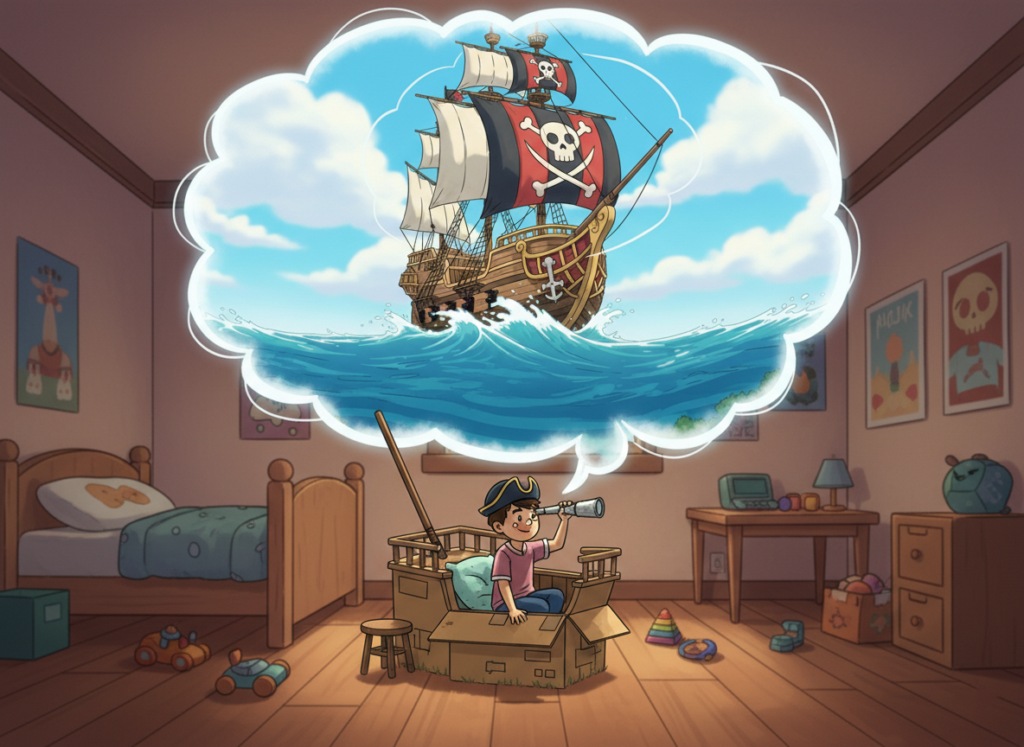
In older children, a process of separation of imagination from concrete objects occurs: the formed “supra-situational position” allows them to create complex images and plots that are not constrained by objects. On the contrary, objects may be incorporated into the imagined situation in the most unexpected roles; moreover, the entire play may unfold on the inner plane, when the child no longer needs objects—the entire plot unfolds before their “inner eye.”
“The child draws and at the same time narrates what they are drawing. The child dramatizes and composes the verbal text of their role. This syncretism indicates the common root from which all separate forms of children’s art have split off. This common root is the child’s play, which serves as a preparatory stage of their artistic creativity; but even when separate, more or less independent forms of children’s creativity—such as drawing, dramatization, composition—are distinguished from this general syncretic play, even then each form is not strictly separated from the others and readily absorbs and incorporates elements of other forms,” writes the well-known researcher of childhood L. S. Vygotsky (1967, p. 61).
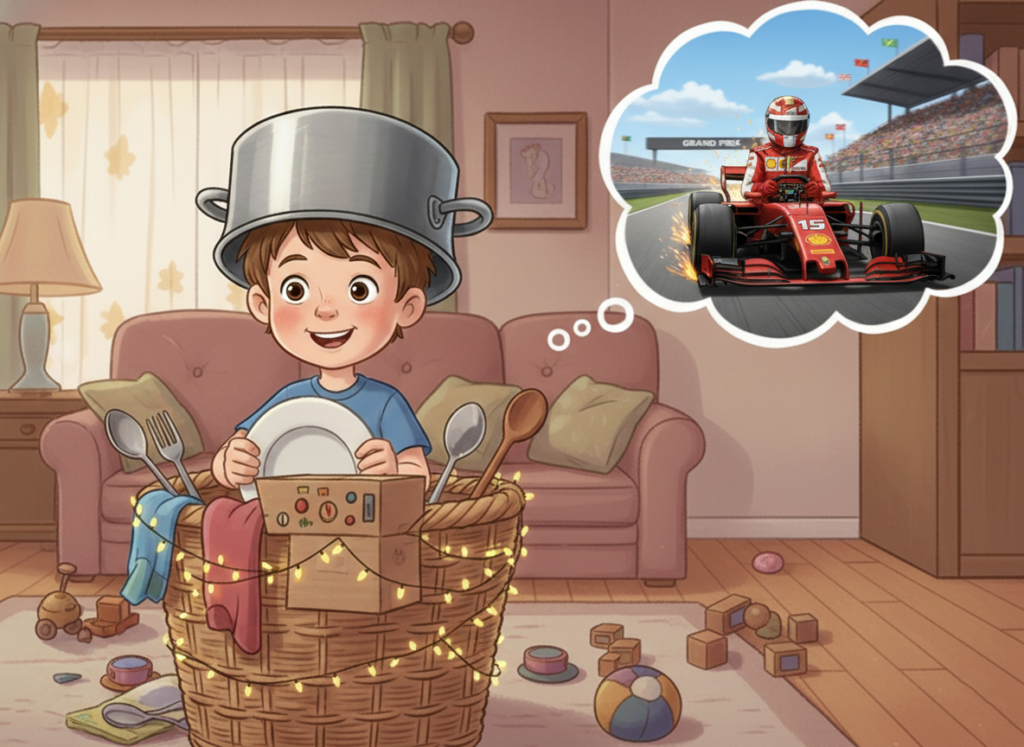
The more opportunities children have for spontaneous, free play, the better imagination will be developed. But the reverse is also true: the more developed imagination is, the richer and more elaborate play will be.
Imagination and Artistic Activity
The emergence of artistic activities—drawing, dance, or storytelling—begins in play, where, even if a child draws, sculpts, or invents a story, they still obey the laws of play. In play, for a child, the process itself has intrinsic value: neither the drawing nor the plasticine figure has independent value but is important only as part of the play. In this case, the drawing may sequentially reflect the hero’s actions and the events happening to them (here the hero is riding a horse; then enemies attack him—on the drawing a second character appears; then the hero defeats them—the attacker is densely crossed out). After such intense action, the drawing no longer has value for the child.
However, gradually the created works begin to acquire independent value for children. This largely depends on the adult’s position—on their readiness to be a viewer and a listener, and thus to help the child enter the position of an author. In this way, drawing and storytelling separate from play.
Initially, children’s drawings are inseparable from director’s play, where drawing, story, and play action complement one another. The first drawings are more likely signs-schemes than symbols, but already from the age of three to four, children begin to use cultural visual means to convey their feelings: colour, form, and later composition, and sometimes they create images that are astonishing in their expressiveness and artistic quality. Here again, the gaze of another person—above all, an adult—proves significant, as it is this gaze that turns what the child has created into a text, a statement, something that can be shared with others. Children’s drawings are a way of talking about their ideas and experiences through the language of colour and graphic form.
At the same time, the capacity to compose verbal stories develops. From around two to three years of age, children begin to generate fictional plots, accompanying their play with them or simply telling them. The stories that children draw and compose are sometimes very simple—and in such cases they fulfil their task by reflecting children’s experiences through symbolic means. But gradually they become more complex; structure, coherence, and rather complex artistic images appear in them.
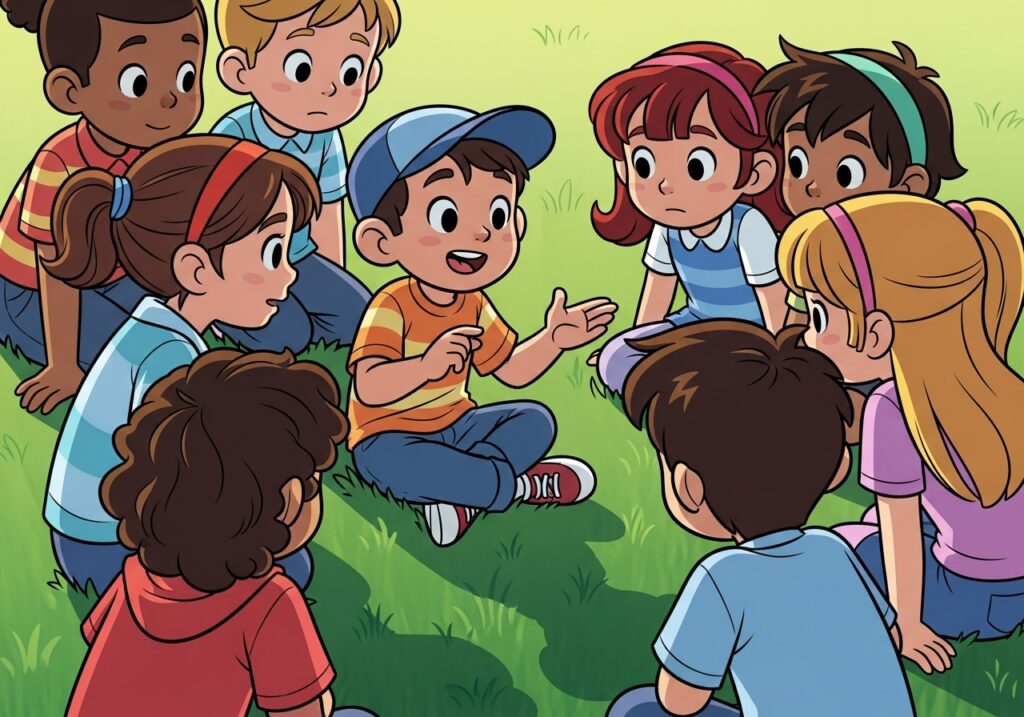
Thus, preschool children are capable of creating full-fledged works of art, rich in expression and using artistic means.
This is where the uniqueness of the age manifests itself: children’s access to complex symbolic means as ways of expressing and embodying their experiences. Of course, the child uses these means unconsciously, unintentionally, and yet there is something that brings children’s perception of the world close to the artistic: “The child is ready to recognize that everything in their surroundings is alive; everything, like the child themself, strives for something, fears something, has a character, and in one way or another relates to them” (Melik-Pashayev). This remarkable feature allows researchers to speak of artistic giftedness not as an individual trait, but as an age-related characteristic. Partly due to the intensity of experiences and the inability to cope with them, partly due to the still undeveloped self-criticism, but the fact remains: the language of symbols is accessible to children—a language that many adults have lost.
Imagination as a Precursor of Theoretical Thinking
This sounds somewhat paradoxical: is imagination not something opposite to strict thinking? However, the author of this thesis, V. V. Davydov, argues that imagination and theoretical thinking perform a single function: to grasp the world as a whole. They simply do so in different ways: the former—through the symbol, in which the general and the particular are united; the latter—through the theoretical concept, which makes it possible to see essential connections. It is precisely developed imagination that prepares the child for operating with theoretical concepts and constructing models.
Imagination is the precursor of artistic—aesthetic—perception of the world and an instrument of artistic creativity. The symbolism of imagination allows surrounding objects to be perceived through the prism of one’s experiences, endowing them with emotional colouring. It is interesting that in this respect children are close to professional artists, while non-artist adults lose out to both. Children also easily translate their experiences into the language of symbols—in drawing, story, or dance. However, if adults do not support these shoots of an aesthetic attitude toward life, they wither.
How to Notice Manifestations of Children’s Imagination
How to Observe — Without Interfering
Manifestations of imagination in a child are often very fleeting.
They easily slip away if an adult looks from a position of evaluation or instruction.
To observe imagination means to slow down and change one’s optics.
- Look Not at the Result, but at the Transformation
Imagination lives not in what has turned out, but in how one thing became another.
Pay attention to moments:
- when an object suddenly changes its sense;
- when an action acquires a new sense;
- when the child themselves proposes a new rule of the play.
A pencil became a thermometer, and then a magic wand.
This is precisely the moment when imagination is at work.
- Listen to the Speech That Accompanies the Play
Imagination often “sounds” before it becomes visible.
Signs include:
- the child comments on their actions;
- talks to objects;
- conducts dialogue on behalf of different characters;
- jumps between roles.
Even if the play seems chaotic, speech holds the integrity of the intention.
- Notice Emotional Intensity
Imagination is almost always charged with feeling.
You may observe:
- deep involvement;
- laughter or tension;
- repetition of the same scene;
- a desire to return to the plot again and again.
This is a sign that through imagination the child is living through something important for themselves.
- Pay Attention to Freedom from Objects
The development of imagination is visible in how much the child:
- is not bound to the “proper” use of things;
- can play without objects;
- constructs worlds “inside themselves.”
If the plot holds even without toys,
imagination has reached a new level of freedom.
- Observe Moments of “Pause”
Sometimes the most important moment is the pause.
A child may:
- freeze;
- become thoughtful;
- silently “complete” something inwardly.
Do not rush to ask questions at this moment.
Sometimes the best observation is silence.
- Do Not Rush to Interpret
It is important not to immediately translate what you see into explanations:
- “They are thinking like this…”
- “It’s because of kindergarten…”
It is better to leave space for sense to remain open.
Imagination is a process, not a message.
- A Simple Rule for the Observer
If you are unsure whether to intervene or not, ask yourself one question:
Am I helping imagination unfold right now — or do I want to direct it?
Most often, it is enough to be nearby, to see, and to allow.
What Can Be Done Together with a Child to Develop Imagination
The Logic of the Development of Imagination
We are not speaking here about age stages tied to a specific “passport” age, but precisely about a logic of development. A child has the right to their own trajectory—something may awaken earlier, something later. And if an adult’s gaze turns into that of a diagnostician, ticking off boxes as to whether a certain skill has appeared, this generates precisely the anxiety that the child “reads,” and it will nullify everything positive in our efforts.
Therefore, the description of plays is rather a map of a space in which one can look for something interesting for oneself and for the child, with an indication of a very approximate sequence.
Vectors of the Development of Imagination
Toward freedom from the concrete object and toward ever greater supra-situationality—the capacity to “detach” from a specific situation. Thus, at first it is difficult for a child to invent what a pencil could be in play; later the pencil may become only a thermometer; and later still, in a play of rescuing a fairy, the pencil may turn into a dragon’s sting.
Stage 1
The Action of Objectification and Detailing
Can the child see another object in an object?
(“What could this circle turn into? What is it like?”,
“What does this shape resemble? Finish drawing it. What did you get?”,
“What can the blot that appeared on your sheet turn into?”)
Stage 2
The Action of Inclusion
Can the child, starting from the original object, create a new, holistic image in which the original object will be only a part of it?
(“Can you finish drawing the figure so that a whole story emerges?”
The child copes with tasks of completing monotype drawings, creating a picture “from a blot”—in all cases they are invited to invent and complete an image, starting from a random blot obtained in various ways.)
Expression of One’s Attitude Through a Symbol
Stage 1
Expression of Attitude Through a Symbol
The child can express their attitude through movement, colour, and form.
The child can, in play or in everyday life, use various symbols to designate roles—“evil like Barmaley,” “wise like Vasilisa the Wise,” and so on.
(“Can you draw a kind and an evil flower?”,
“Can you show how a cheerful and a sad hare dances? And how a brave and a cowardly wolf dances?”)
Stage 2
Expression of Attitude Through a Symbol
The child can express their attitude not only through colour, form, and movement, but also through composition and the plot of a story, creating joyful and sad, heroic and tragic pictures and stories.
Story Creation
Stage 1
Story Creation
The child can invent short stories; sometimes they contain only a listing of events, and sometimes they already have a structure—beginning, inciting moment, climax, and ending.
Stage 2
Story Creation
The child can create stories (fairy-tale or based on personal impressions), and these stories are coherent, have a structure (they have a beginning, climax, and resolution), and an original plot; their content corresponds to the title.
(“Invent a story, draw it, and then tell it to me. Invent a title for the story.”)
The Simplest Steps
Say This — and Avoid That
Say this:
- “Tell me about this.”
- “And how did you come up with this?”
- “What is the most important thing here?”
- “And if the story continued…”
It is better not to say:
- “That doesn’t happen.”
- “Draw properly.”
- “You’re fantasizing again.”
- “Let’s do something useful.”
Everyday Advice
- Give Space Without a Goal
Every day, leave at least 10–15 minutes for an activity without a result: play, drawing, inventing—without any hint of “what came out.” - Ask a Question Instead of Evaluating
Instead of “Nice” — “Do you want to tell me what is happening here?” - Allow Strangeness
If an idea seems absurd—do not correct it. Imagination is nourished by freedom, not correctness.
Common Mistakes — and What to Do Instead
Mistake 1: Demanding a result
✔ Instead: value the process
Mistake 2: Correcting the child’s intention
✔ Instead: clarify and listen
Mistake 3: Comparing with others
✔ Instead: take interest precisely in this intention
7-Day “Imagination” Challenge
Day 1: Invent a new purpose for an object
Day 2: Compose a short story together
Day 3: Draw a “mood”
Day 4: Invent something “the other way around”
Day 5: Turn an ordinary object into a symbol
Day 6: Tell a story from the point of view of a thing
Day 7: Discuss what was the most interesting
What Parents Say
“I realized that I was interfering with imagination because I was afraid of chaos.
When I let go—it became easier both for me and for my child.”
“I always thought that I didn’t know how to fantasize.
It turned out that it is enough simply to listen.”
“The most unexpected thing is that I myself began to enjoy these plays.”
What Can You Play?
Plays with Children Aged 3
What Can Be Played with This?
Select several objects for the play that do not have a clearly defined purpose: a stick, a block, a small box, a pebble, a piece of cardboard, and so on. The task is to invent what they could be—what real object they could substitute for. At the beginning of the play, you take any object, for example a stick, show it to the child, and suggest inventing what it could be in play.
It will be wonderful if the child themselves names possible options, but if they find it difficult, help them. You surely remember that a stick can be a thermometer for a doll, a spoon, a key, a fishing rod; but a block cannot be used to feed a doll, and a box cannot be used to measure temperature, because one of the obligatory conditions of the play, which must be strictly observed, is a certain resemblance to the real object.
By following these simple rules, you can become a good partner in any children’s play. When the child understands how to play, each new object can be placed on the table, and you can take turns inventing what it can be used for. Try suggesting a cheerful competition—who will name more options. Let the child be the winner.
It is also useful to play the opposite play with the child: suggest that they invent which objects could be used instead of a spoon for a doll, instead of a bed, instead of a car, and so on. This will also help them easily substitute one object for another, more broadly using the possibilities of imagination.
“What Could We Make a Spyglass From?”
This play is the reverse of the previous one: suppose that in the play we need a certain object, and we must invent what could represent it.
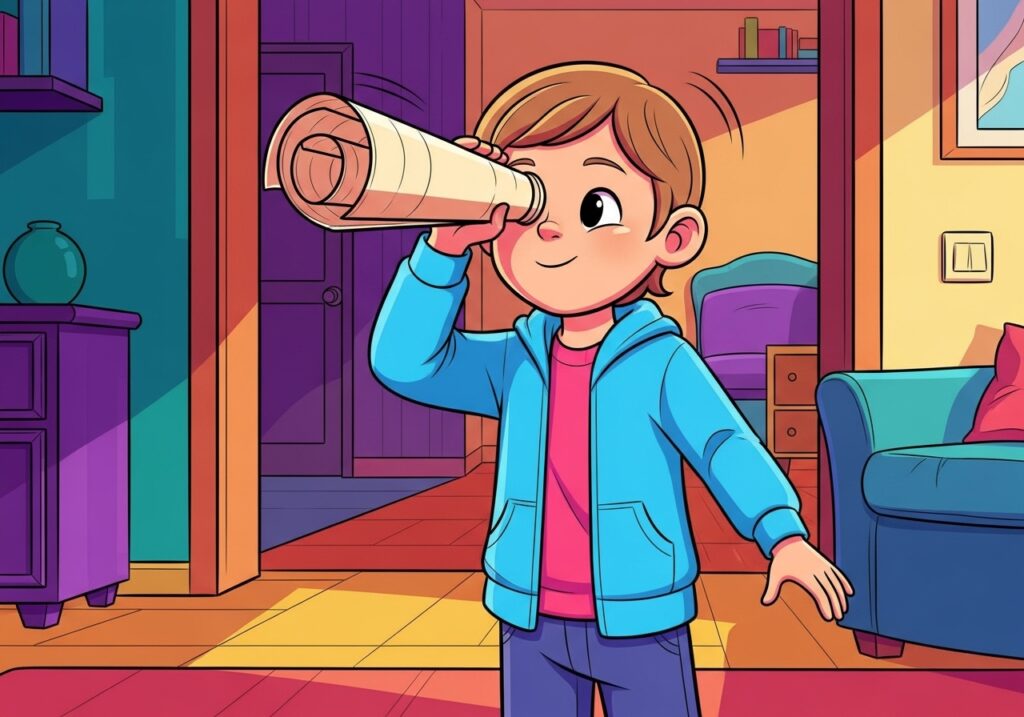
If we need a spyglass in the play, what could become one? A glass? A glasses case? A notebook rolled into a tube? A pen? A roll of wallpaper? The more options—the better!
Gifts for the Doll
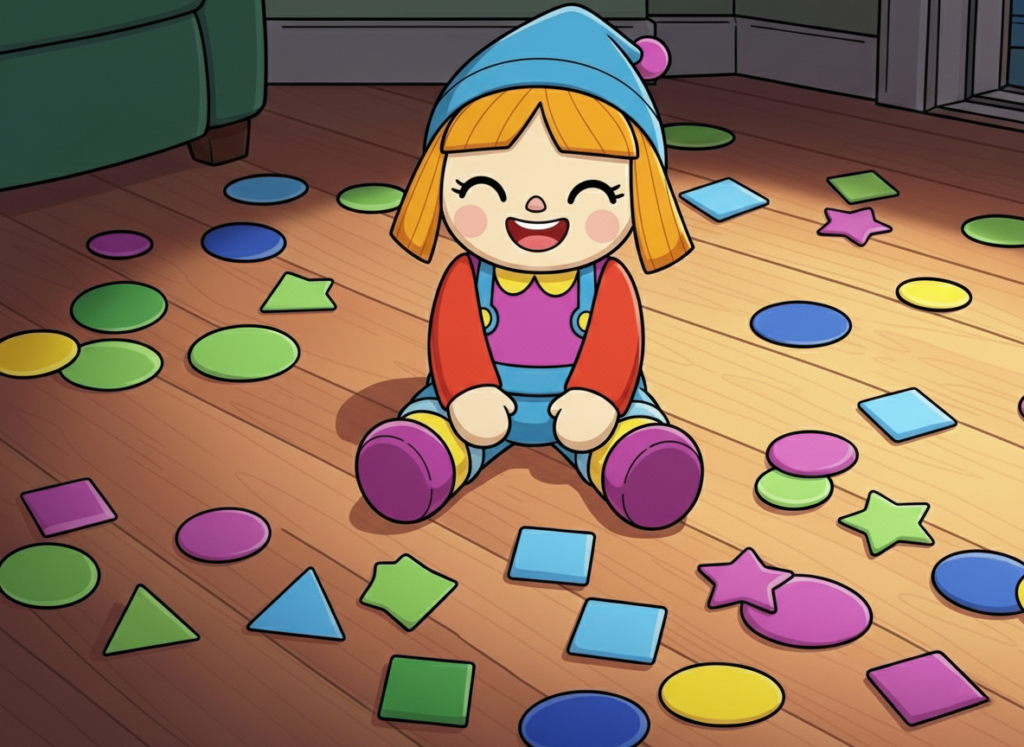
Cut small circles out of coloured paper and place them in a bag or a box. Tell the child that today it is the doll’s (or bunny’s) birthday and that various gifts have been brought. The task is to guess what these gifts are.
For example, about a red circle one can say that the doll was given a ribbon, a flag, a strawberry, a ball, a flower, and so on.
Take the circles out one by one and invent what each one is. Try to give as many answers as possible. Two or three circles are played at one time. When the child becomes comfortable with the play, it can be slightly complicated. Let the child tell about each gift—who gave it and why, and so on. The play can be varied by offering figures of different shapes instead of circles (squares, triangles, and so on).
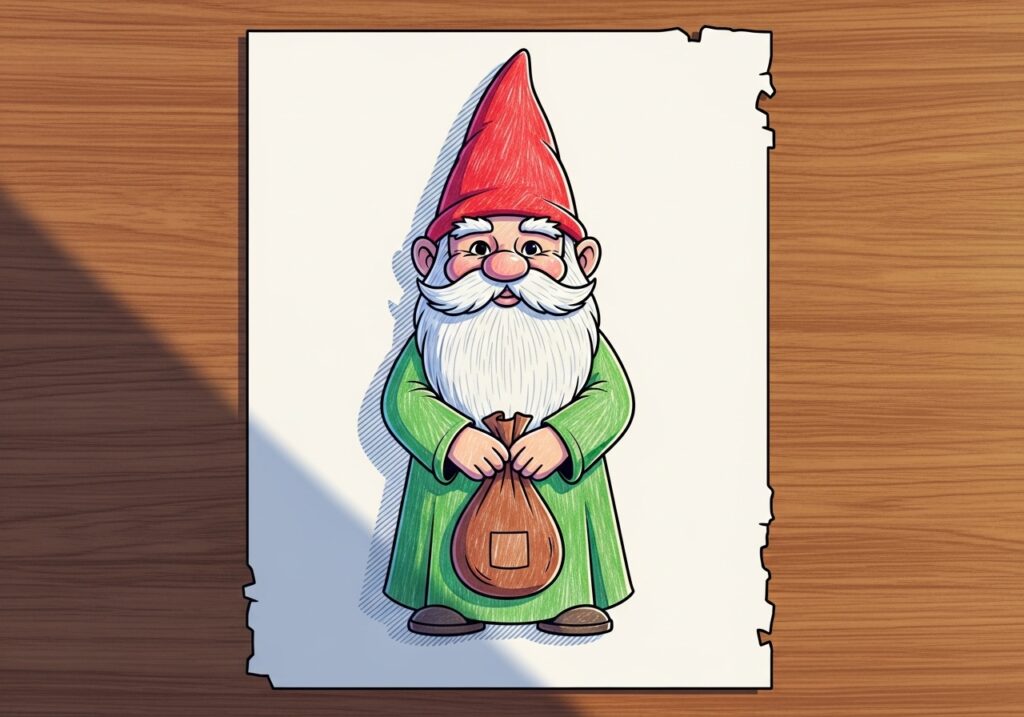
The Cheerful Gnome
Try drawing a friendly gnome holding a little sack in his hands. In addition, cut out several more sacks of different shapes from paper so that they can be placed over the drawing. Then the sacks in the gnome’s hands will change. The sacks may resemble a wide variety of objects by their shape: a ball, a fishing rod, a mushroom, a bunny, and so on. It is good if one of the sacks has a shape that makes it difficult to give a single definite answer as to what is inside it, since several objects can be named.
Invite the child to fantasize together and invent what the gnome has in his sack. First, try to find as many answers as possible for a sack of one shape, then replace it with a sack of another shape, and so on. Together with the child, you can invent a short story about how this or that object ended up in the gnome’s sack and what will happen next.
Plays with Children Aged 4–5
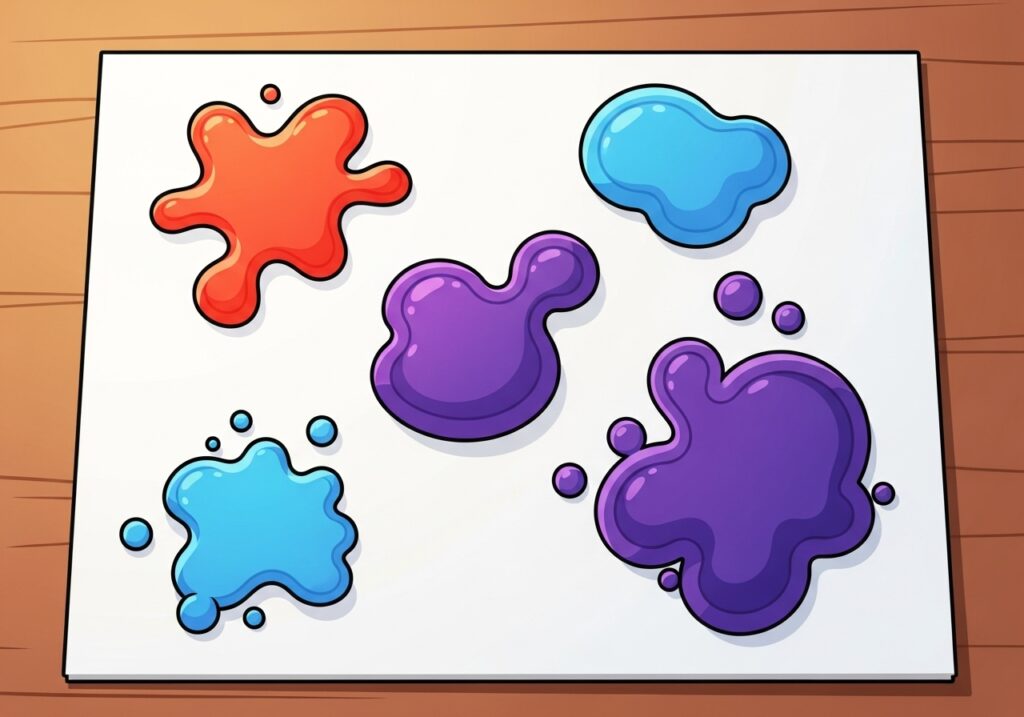
Magic Blots
Prepare several blots: pour a little ink or black drawing ink onto the middle of a sheet of paper and fold the sheet in half. Then unfold the sheet, and the play can begin. The players take turns saying what the blot looks like. The winner is the one who names the greatest number of objects.
The Fairy-Tale Box
Cut out several (8–10) circles of different colours from paper and put them into a box, then cover the box with a scarf. The fairy-tale box is ready. Invite the child to compose a fairy tale together with you. The one who starts takes a coloured circle out of the box. One must invent who or what this will be in the fairy tale.
For example, if the child pulls out a green circle, one can suggest telling a fairy tale about a grasshopper, a green leaf, a cucumber, and so on. After the first player says two or three sentences, the next player pulls out another circle, says who or what it is, and continues the fairy tale. Then the next player pulls out a circle, and so on.
After one fairy tale has been told, all the circles are collected again, and the next fairy tale can be told. It is important that each time a complete story is created, and that the child invents different variants of answers for the same circle in different situations.
Guess What Will Come Out
For this play you need a sheet of paper and pencils for each player. The first player begins some kind of drawing (only one line may be drawn). The next player says what this could be and adds one more line. The following player must invent something different and add a line in accordance with their intention. This continues until one of the players can no longer change the drawing in their own way. The one who made the last change wins.
One of the valuable aspects of imagination is its ability to reflect an attitude toward reality by means of artistic tools. This ability can be developed by trying to express the invisible—mood, character—through the visible—colour, form, and so on.
Simple Tasks
- Choose a picture whose colours match a mood (you can use cards like those in the play Dixit).
- Draw a picture whose colours match a mood.
- Choose paints whose colours correspond to the sound of music (you can choose contrasting musical fragments).
- A reverse play: one person chooses a colour, and the other guesses which music or which mood is being implied.
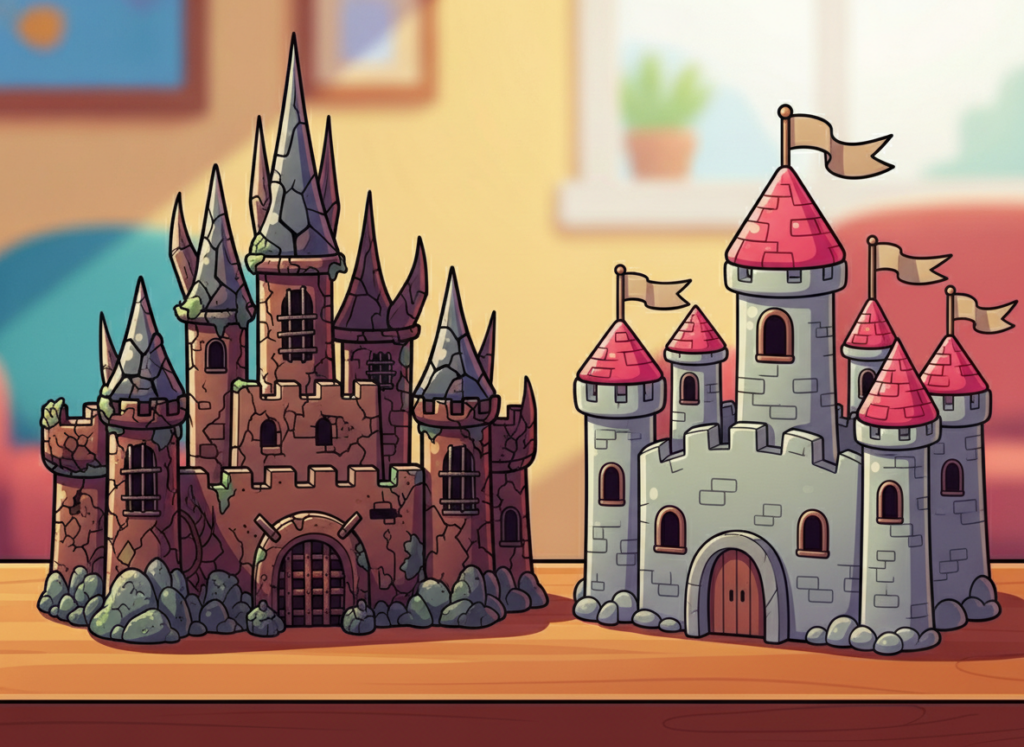
The Castle of the Prince vs. Dragon
A more complex task consists in expressing not a mood, but a character. For this, you can use a construction set or any building materials (and even plasticine) and invite the child to build a castle for the Prince and a castle for Koschei the Deathless in such a way that one can guess which castle belongs to whom.
After that, the adult tries to guess, and the child comes to their aid—explaining why the castles turned out the way they did. If the adult nearby also solves the same task, you can discuss what worked and what did not, and jointly improve the castles.
Plays with Children Aged 6–7
The Magic Forest
Each participant in the play (there may be two or more) receives a sheet of paper and pencils. On the sheet, in addition to schematic images of trees, there are unfinished images.
Invite the children to draw a magic forest and then tell an interesting story about it. Let each child complete the images so that a forest scene emerges. The unfinished figures can be turned into anything: flowers, trees, butterflies, birds, animals.
Then you look at the drawings together, listen to the stories, and note the most complete and original ones. It is recommended to vary the material for the play; for example, you can invite the child to depict a “Magic Sea,” a “Magic Glade,” a “Magic Park,” and so on.
Things That Do Not Exist in the World!
Invite the child to draw something that does not exist in the world, and you will see with what pleasure they complete this task.
Ask the child to tell what they have drawn, and together discuss the picture: does what is depicted on it really not occur in real life? The play will be more fun if you also take part in inventing and drawing.
Reading “Upside-Down” Poems
Read “upside-down” poems together with the child—there are many of them in folklore, in the works Edward Lear, Lewis Carroll, and other poets.
This makes the familiar unfamiliar, new. Such stories give children pleasure when they already know “how it should be,” and are so confident in this knowledge that they are ready to experiment and laugh, seeing how fiction differs from the truth known to them.
Creating “Upside-Down” Worlds
Creating objects and stories “the other way around” is an important part of growing up. First, this is how norms are mastered: the child tests the boundaries of rules by trying to invert them. The appearance of a “world turned upside down” means that the child has grasped verticality as a fundamental way of perceiving the surrounding world. Second, upside-down stories are a way of coping with tension by transforming situations into comic ones. Children have a highly developed sense of the funny; behind children’s humour lies a special work of inverting an initially anxiety-provoking situation.
- Draw a house, a car, a forest, a city “the other way around” — and tell how it is, what in it is upside down.
- Invent a “fairy tale the other way around”: to do this, choose a very familiar fairy tale that the child has heard many times.
- Invent a funny story.
- Invent a story about something frightening but make it so that the story is funny.
Story Creation
Stories are a completely special way of reflecting the world. Stories have laws of construction, which the child begins to master from the very moment when they are first sung lullabies and read books. The child themselves becomes a creator of stories. First, in play—director’s or plot–role play—where a plot gradually appears and becomes more complex; and second, in storytelling. Play helps one tell stories better; storytelling allows play to become more complex. In all cases, we are dealing with the work of imagination.
Children compose stories literally “in passing,” but gradually storytelling can become an independent line of invention, especially if adults listen with interest and attention. Building a coherent long story from the beginning is rather difficult for a child, but this can be helped by suggesting that the story be drawn and written down.
How to Do This?
Suggest recording the story:
“Would you like to draw the story and then dictate it to me, and I will write it down? Then we can read it together (to Dad, Grandma).”
Where to Write It Down?
You can start a special notebook for stories, or you can make a separate little book from an A4 sheet for each story and then combine them into a common album.
Why Draw?
A drawing helps to hold the intention: sometimes this helps young authors immediately designate a certain whole and then unfold the story in words without losing its logic.
Is a preliminary drawing obligatory? No—everything depends on what suits the child better. Sometimes the idea of drawing a story and then telling it takes root immediately. And sometimes the child can tell a story without a drawing, right away, immediately.
How to Write It Down?
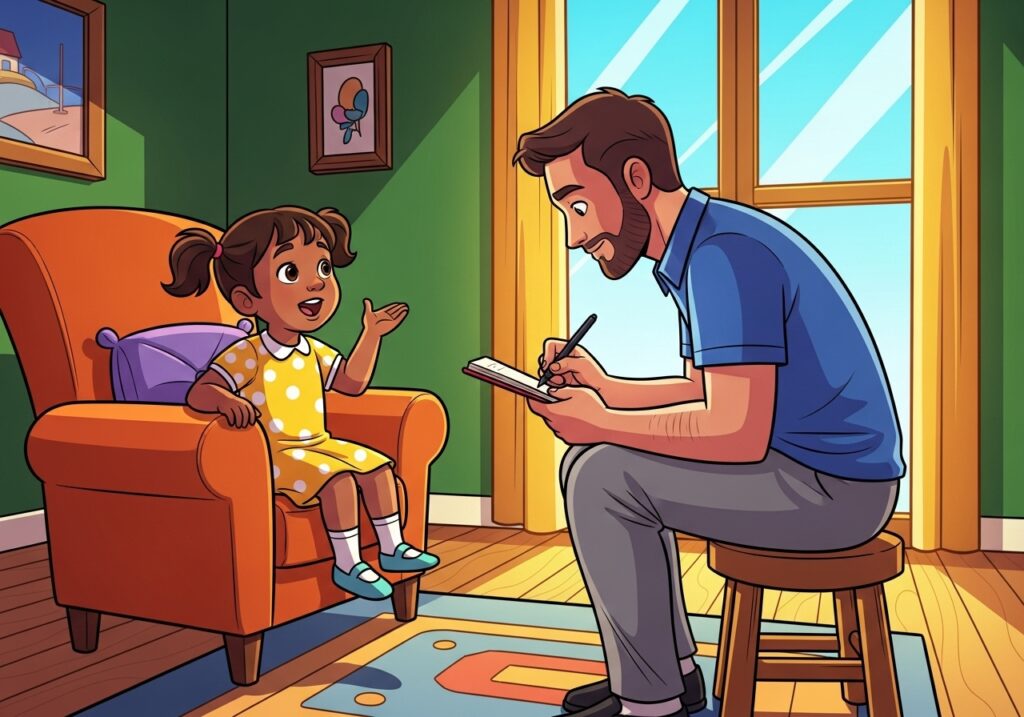
Dictation is a joint action of an adult moving toward the child. The child speaks faster than the adult can write, and this is good: one needs to say that the speed of writing is slower —then the storyteller will slow down, and thanks to this will be able to construct their narrative more thoughtfully.
Is it possible to correct what the child says if they make mistakes when pronouncing words? Better not.
Is it possible to ask guiding questions so that it becomes clearer what the child means? Questions should be asked very carefully so as not to frighten off the child’s intention. If the story is unclear, one can ask a question—in order to understand and write it down (who did this?)—but it is important not to turn the process of recording into an interrogation.
Is it possible not to write the story by hand, but to type it on a computer? Research shows that it is precisely writing in printed letters, which appear before the child’s eyes, that helps grasp the idea of translating oral speech into written signs and helps the child imperceptibly prepare for writing and reading. So it is better to write it down by hand.
How Adults Can Liberate Their Own Imagination
Imagination is not a luxury, but a part of a full life: a source of aesthetic joy, non-trivial hypotheses, and bold decisions. At the same time, the system of modern education is structured in such a way that imagination remains unclaimed. As a result, we often leave school with a firm conviction that we do not know how to invent, draw, dance, and so on. But all this is nothing more than stereotypes imposed on us from outside. In reality, the gift of imagination exists in everyone—and children bear witness to this. This means that it is important for adults to “awaken the magician within themselves.”
One can try, in a circle of friends and loved ones—including for family and friendly amateur performances—the following practices that help imagination awaken:
- Using metaphorical cards (such as those in the play Dixit), answer questions: how does the card I drew associate with my mood, my character, the events of my life today?
- When creating gifts for friends, invent collages with the thought of what colours, sounds, and images you associate with the person you love.
- Invent a story that could be told by some object from your everyday life: a coffee cup, a shoe, a laptop.
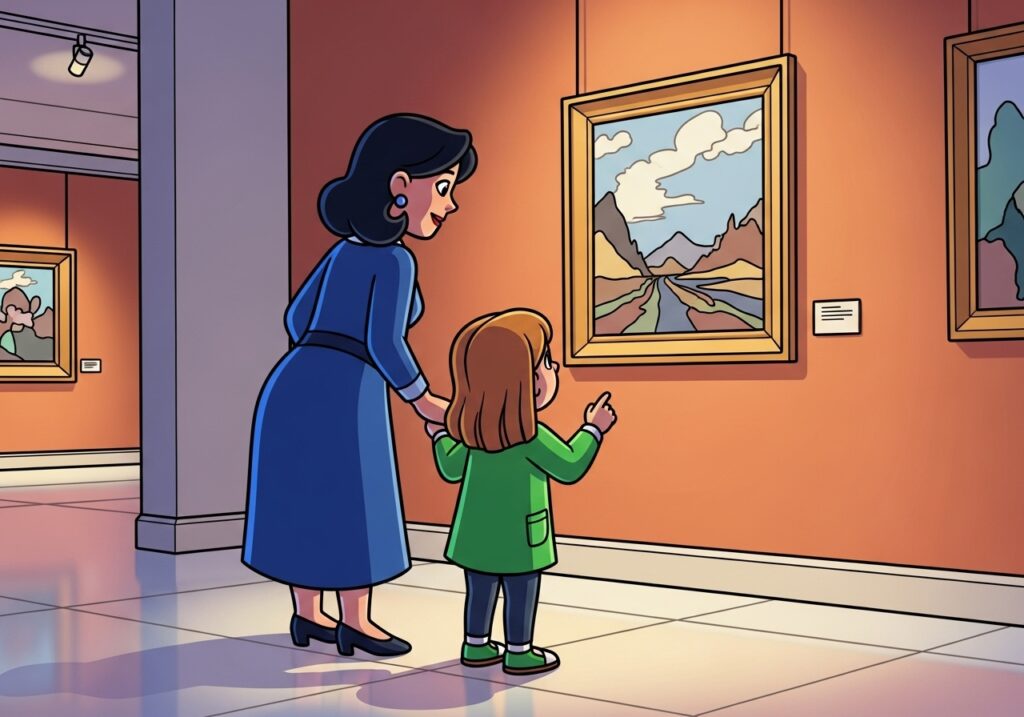
- In an art gallery or at an exhibition, find a painting that in some way resembles you and your life. You can ask a question on behalf of the work of art that touched you: what in your life resonates with it?
Invent with joy!
Supporting imagination means trusting the child’s inner world. And at the same time, it is a rare opportunity for an adult to regain the lost freedom to see the world not only as it is, but also as it could become.
Evaluate Yourself: How Do You Support Imagination?
The Ladder of Parental Competence
A Simple Model of Movement and Growth
Parental competence in the field of imagination is not about “being able to invent,” but about being able to create conditions.
The Competence Ladder
Level 1. I Notice
— I see that the child fantasizes, plays, invents strange stories.
— Sometimes it seems to me that this is “just fooling around.”
Level 2. I Do Not Interfere
— I do not interrupt, correct, or demand that it be “done properly.”
— I allow the play and the story to continue.
Level 3. I Support
— I show interest: “And what happens next?”, “And why is it like that?”
— I accept the imaginary as something important.
Level 4. I Develop
— I create space for play, stories, and drawing.
— I become a listener, a viewer, a co-author.
Mastery is not guidance of imagination, but trust in it.
Mini-Diagnosis: “Evaluate Yourself in 1 Minute”
Mark which statements are closer to you:
- I am calm about a child’s strange ideas
- I do not demand that play have a “sense” or a result
- I am interested in listening to children’s stories, even if they are illogical
- I can be a viewer, not a teacher
- I do not rush to evaluate (“beautiful / not beautiful”)
1–2 points: “I notice”
3–4 points: “I support”
5 points: You already create conditions for the development of imagination
This is not a test “for being a good parent,” but a map of movement.
What to Read?
- Rodari, Gianni. The Grammar of Fantasy: An Introduction to the Art of Inventing Stories. Translated by Jack Zipes. New York: Teachers College Press, 1996.
- Paley, Vivian Gussin. The Boy Who Was a Helicopter. Cambridge, MA: Harvard University Press, 1990.
- Paley, Vivian Gussin. A Child’s Work: The Importance of Fantasy Play. Chicago: University of Chicago Press, 2004.