![[EN] CHILD LAB](https://childlab.co.uk/wp-content/uploads/sites/4/2026/01/child-lab-logo.jpg)
Why Humanity and Children Need Dialectical Thinking
What Is Dialectical Thinking and Why Do Adults Need It?
Dialectical thinking is the ability to see the world in development: to understand that things, phenomena, and people do not exist once and for all, but are constantly changing, moving from one state to another, and combining opposites within themselves. This type of thinking helps us notice connections and transformations, search for the causes of change, and see contradictions as a source of movement.
Unlike formal-logical thinking, which strives to order and separate (“either this or that”), dialectical thinking seeks the interconnection of opposites (“how can both be possible at the same time?”) and recognises that one thing can transform into another.
Formal logic is needed to bring order to knowledge, while dialectical thinking is needed to understand how something new is born – and to create it. It is this form of thinking that makes a person capable of creativity, flexibility, and genuine understanding of life.
Dialectical thinking helps us not to fear contradictions, but to use them as a source of movement: to see that difficulties and opportunities are two sides of the same process, that growth can be born in conflict, and that an idea can emerge from limitation.
It is precisely this type of thinking that allows something new to be created in situations where familiar patterns no longer work.
This was the case, for example, when Darwin realised that species do not simply exist, but develop – his discovery became possible precisely because of the ability to notice internal contradictions in nature. Or when Impressionist artists dared to paint not what they saw, but how they saw – because they sensed that the old way of depicting the world had exhausted itself. Even fairy tales work according to the same principle: when a hero finds themselves in a seemingly hopeless situation (“come both clothed and unclothed”), it is the ability to find a “third” solution that turns what appears to be inevitable defeat into victory.
What is remarkable is that dialectical thinking is accessible both to adults who are capable of flexible, non-standard thinking, and to children, for whom this ability exists precisely because formal-logical thinking has not yet been fully formed. That is why children are excellent conversational partners for adults who seek to develop dialectical thinking.
Dialectical thinking is the ability to see contradictions and find creative ways out of them. The world is not black and white; it is full of shades and paradoxes. A task that sometimes seems insoluble to us adults (“How can one be both strict and kind at the same time?”, “How can one work and spend more time with family?”) is an interesting challenge for a dialectical mind. Dialectical thinking makes an adult flexible, open, and alive. It allows them, like a child, to see the world in development – not as a set of ready-made forms, but as a space of transformations and creativity.
Myths About Dialectical Thinking and Its Development
The most widespread myth is that it is “too early” or “too difficult.” It is the preschool child who is a natural researcher of transformations: they see how snow turns into water, day into night, a seed into a sprout.
The second myth is that dialectical thinking is formed through explanations and special “logic lessons.” In fact, a child assimilates the logic of development through action, not through explanations – when they mould, observe, play, ask questions, argue, and are surprised.
Another myth is that the adult’s task is to “protect the child from contradictions” (since they only cause anxiety), to explain everything quickly, and to “correct” paradoxes. On the contrary, it is precisely the encounter of opposites and the search for an answer to “how can it be both this and that?” that makes thinking alive.
Finally, adults sometimes believe that development is a smooth, gradual process. But this book shows that development is always connected with internal tension and the search for a new way of thinking. A difficult question does not always bring immediate pleasure. Therefore, the main thing a parent can do is not to simplify the world for the child, but to help them endure complexity, see meaning in it, and experience the joy of searching and discovering. A difficult question is interesting.
How Does Dialectical Thinking Manifest in Children?
You have surely noticed that children easily accept change.
The snow has melted – surprise, joy.
Plasticine has become a “pancake” – delight.
A fairy-tale hero was cowardly and became brave – the child immediately understands this and rejoices.
Moreover, from time-to-time children express ideas that surprise adults:
“On one hand I have obedient fingers, and on the other – disobedient ones.”
Or they seriously ponder whether a snowman could survive the summer if given a refrigerator.
Do not rush to dismiss this as fantasy disconnected from reality. In fact, you are witnessing the operation of a powerful tool – dialectical thinking. This is not boring philosophy from a university textbook, but a natural way for a child to comprehend the world.
It is natural for children to perceive the world as alive, changeable, and in motion.
This perception is their great strength.
It turns out that our children are born dialecticians. They easily coexist with opposites:
- In play, a doll is both a toy and a living character.
- In a fairy tale, a frog is both an animal and an enchanted princess.
- In life, they may say that “the benefit of little children is joy,” easily combining seemingly incompatible concepts.

But for this strength not to disappear and instead become the foundation of future thinking, it is important for us adults to help the child see meaning in these changes and feel that behind every phenomenon there is a story: something was, something has become, and something may become next.
It is important to look at the world as the child sees it – in development, in movement, in transformation. This is precisely the beginning of dialectical thinking, which later helps a person understand complex situations, find the new, and be creative and flexible.
Dialectical Actions — Tools of Creative Thinking
Dialectical actions are thinking tools that already exist in a child’s play.
To see the world in development, a child needs special “tools”: dialectical mental actions that help solve complex tasks.
- Transformation
The child sees that one thing can become another and understands the connection between these states
(a frog becomes a princess; snow becomes water; a timid hero becomes brave).
This is the foundation of any understanding of development.
- Integration
The child notices that one object contains two sides: good and evil, strong and weak, beautiful and frightening. This is how beloved characters are structured: Karlsson, the Scarecrow, the Tin Woodman. This teaches the child to see complexity.

- Mediation
A very important action: finding a “third” element that connects two opposites.
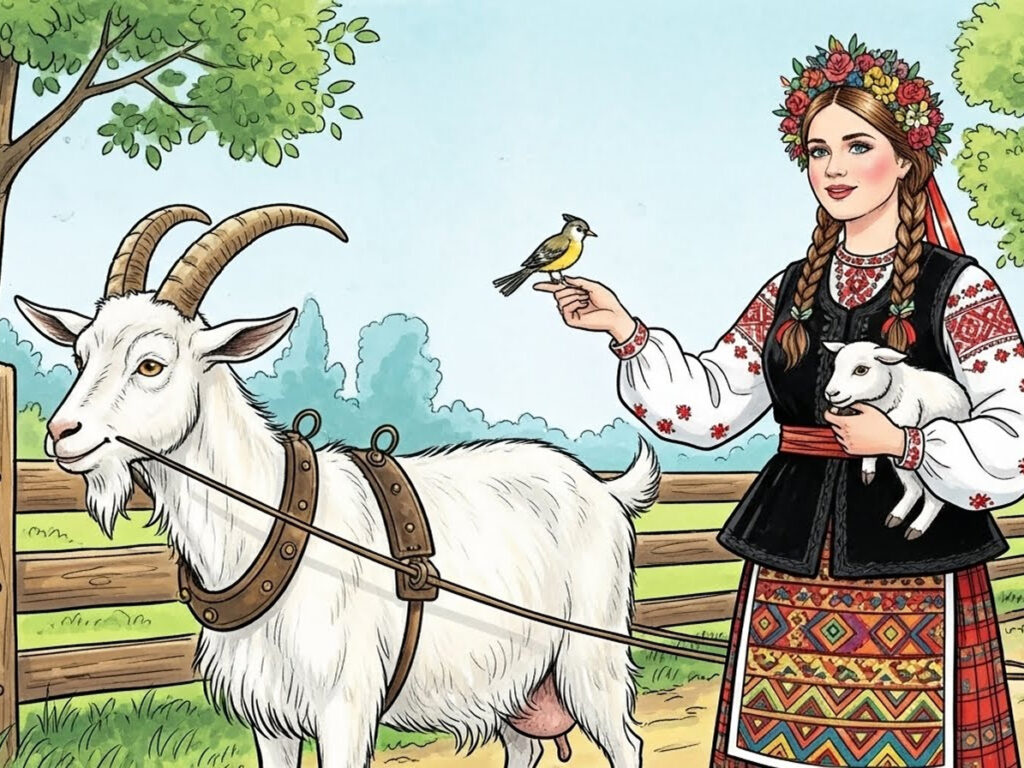
For example, folk tales often include a hero who must come both on foot and on horseback – meaning they must arrive riding a dog; both clothed and unclothed – meaning wrapped in a net. This is the ability to find unexpected solutions.
- Inversion
What seemed to be a cause becomes an effect, and vice versa.
A name (“the one who killed seven with one blow”) becomes the cause of the hero’s behaviour.
The child learns that reality is not always linear.
- Closure
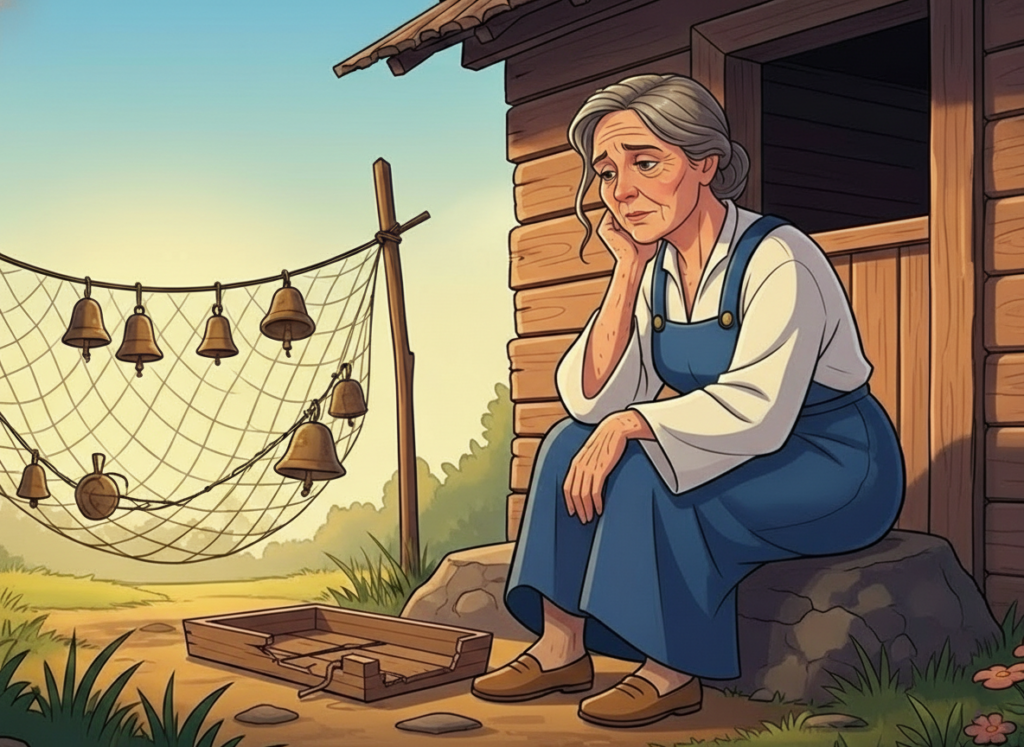
Movement forward leads back to the starting point – but at a different level. In Grimm’s “The Fisherman and His Wife”, the growth of desires leads to collapse and return to the beginning.
This is an understanding of cycles and limits.
- Change of Alternative
The child discovers that the true opposition is not the one they initially assumed.
In “The Gingerbread Man,” it is not size but cunning that matters.
This is the ability to change perspective.
- Identification and Disidentification
Sometimes opposites turn out to be the same thing (a bear is both enemy and helper). Sometimes what seemed identical breaks into two different qualities.
This teaches flexibility of understanding.
All these actions are mastered by the child through play, conversation, fairy tales, and observation – not through explanations, but through experience.
How Can the Manifestations of Children’s Dialectical Thinking Be Observed?
Development is the emergence of a new quality – not simply “one more” variant of something, but a genuinely new state.
Children are capable of seeing this. Moreover, they are incredibly sensitive to the moments when one thing transforms into another.
You will most likely recognise your own child in these examples:
- “The Why-Asking Explorer”
They do not merely ask “Why?”, but pose tricky questions that leave adults at a loss:
“Mum, were you ever small?”,
“Why is it called breakfast? Are we breaking something fast?”
They are not searching for a simple fact, but for a hidden contradiction.
- “The Inventor-Dreamer”
They suggest putting gloves on their feet “so that the toes won’t be bored,” or draw a circus where the audience performs and the performers watch. This is not a mistake, but a brilliant reversal – a dialectical move that turns everything upside down.
- “The Peacemaker-Negotiator”
In a conflict with a brother or sister, instead of simply shouting “Give it to me!”, they propose:
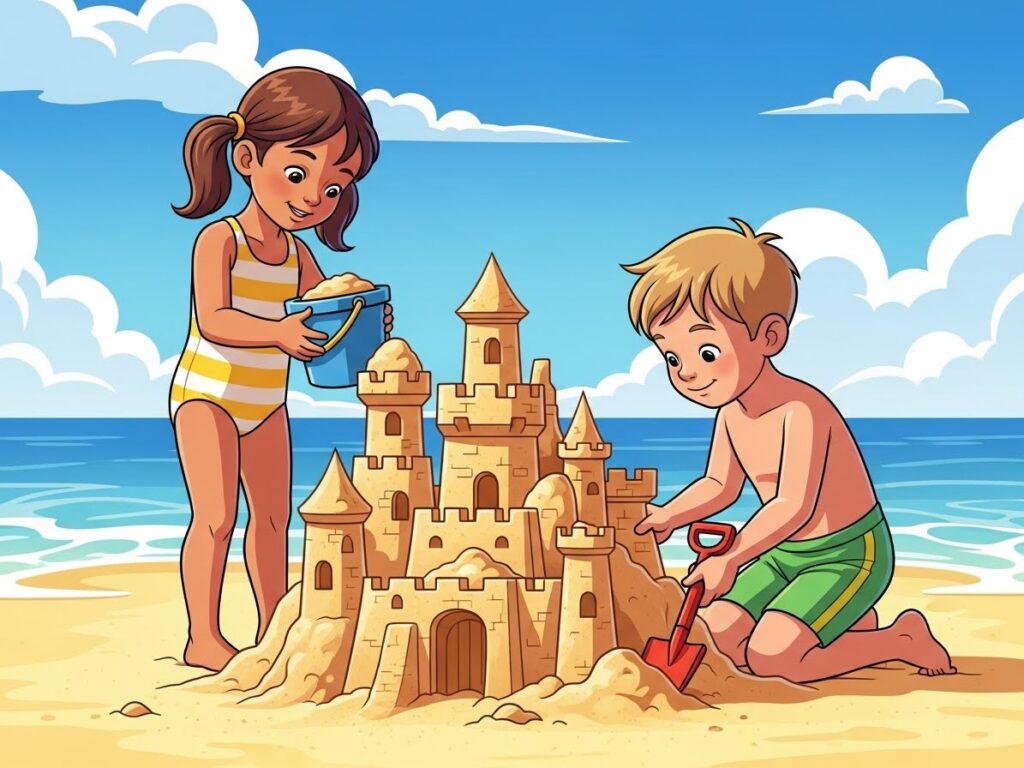
“Let’s finish building the castle together first, and then you can play with the car on your own.”
They intuitively search for a solution that unites opposing desires.
When we speak of “dialectical thinking,” we are not referring to philosophical categories, but to a child’s ability to:
- notice changes,
- see opposites,
- understand that opposites can exist within a single phenomenon,
- notice how one state transitions into another,
- see cycles and recurring rhythms,
- find connections between events – not external, but internal, meaningful ones.
This type of thinking helps a child understand:
- that the world is not strictly divided into “good” and “bad” – in some phenomena we can see both sides;
- that things change – and that this is normal;
- that the same thing can be both one way and another, depending on the situation;
- that development is not destruction, but a new form growing out of the previous one.
It is this understanding that makes a child flexible, resilient, capable of adapting to change, and – most importantly – capable of creating something new.
What Can Be Done to Develop Dialectical Thinking in Children?
Everyday Advice
For a child to feel confident, they need the ability to:
- hold complexity,
- see both sides of a phenomenon,
- understand that the world develops,
- not be afraid of the new,
- invent solutions where there are no ready-made answers.
It is precisely this type of thinking that makes a person mature, flexible, creative, and capable of living in an era of change not with fear, but with curiosity.
The Role of the Parent: Not to Explain, but to Notice Together
A child develops not because something was explained to them. They develop because they see – together with you. To notice changes. To be surprised by transformations. To laugh at clever puzzles. To discuss “double” characters. And simply to live in a world where everything develops – including the child themselves. Your role is to be attentive, curious, and open. Then the ability to see the new, understand complexity, and hold contradictions will become a natural part of the child’s thinking – and their life.
Child Development Depends Not on “Teaching,” but on the Conditions Created by Adults
In preschool age, these conditions are created through:
- communication,
- play,
- reading,
- questions,
- observation,
- discussion of fairy tales and stories.
Supporting Play – Creating Conditions for It
Play is dialectical by its very nature. Everything in play lives through transformations: a block becomes a car, a stick becomes a magic wand, a child becomes first a doctor, then a lion, then a mother. Play connects the real and the imaginary, “pretend” and “for real,” allowing the child to be both themselves and someone else at the same time.
This is where its developmental power lies: the child acts in a world where opposites can exist simultaneously, where roles can change, transitions can be sought, and connections can be built between what seems incompatible. Through play, the child masters the very logic of development: learning to see how one state gives rise to another, how the new grows out of the old.
That is why it is important not to rush to explain that “this isn’t real”: in play, the child is trying out ways of thinking that will later become the foundation of their ability to understand life in all its variability.
Discussing with Children Questions That Require Dialectical Thinking
What Kinds of Questions Can Be Discussed with Children?
Questions of Anticipation
Learning to imagine how a situation or phenomenon might change – with different possible variants.
For example:
- How will the fairy tale end? What different endings could it have?
(Such questions can be asked while reading any fictional book.)
- What will a telephone be like in 100 years? And a kindergarten? And cars?
How will they be similar to today’s ones, and how will they differ?
Let’s each draw our own version and compare!

- Who will you be when you grow up? What different possibilities are there?
- Let’s invent a story about a little person who went on a journey.
Come up with three different developments of events – draw and tell them
(or let’s each draw two versions and compare them).
- Who can come out of an egg? (Who can offer more answers?)
- Looking together at family photographs:
What was the child like when they were little?
Do they recognise their parents, grandparents in childhood photos?
How were clothes different? And dishes? And cars?

- What could an unusual machine be like (or a “machine the other way round”)?
- What could an unusual table be like (or a “table the other way round”)?
- What could an unusual house be like (or a “house the other way round”)?
Questions of Reconstructing the Past
It is important for the child to be able to imagine what familiar objects, phenomena, or beings were like in the past.
- Together explore what telephones, cars, and televisions were like several decades ago.
- What prehistoric ancestors of humans or familiar animals – cats and dogs, birds and crocodiles – might have been like.
Questions Involving Ambiguous Situations (Uniting Opposites)
- Is Baba Yaga in fairy tales kind or evil?
- Is Winnie-the-Pooh clever or foolish?
- Is the Cowardly Lion in The Wizard of Oz cowardly or brave?
- Is a person flying in an aeroplane moving or not moving?

All these questions have one thing in common: they cannot be answered unambiguously. There are arguments both for and against. However, people tend not to hold this duality and instead reduce everything to a single answer – that is, to simplify.
Discussion helps to take several steps:
- to discover a point of view opposite to the initial one;
- to discover that both points of view are valid;
- to open up the simultaneity of two opposites.
However, this becomes a genuine discovery only if a discussion takes place. During discussion, it is important to listen attentively to what the child says – their arguments – and to offer arguments for the opposing point of view, and then return to the original question (kind or evil? clever or foolish?).
Questions on the Synthesis of Opposites
Here a shorter path is possible: the opposites are formulated immediately.
Come up with 5–6 examples of something that can be simultaneously:
- black and white
- kind and evil
- cheerful and sad
- beautiful and ugly
- small and big
- clever and foolish
- soft and hard
- fast and slow
Riddles from the Fairy Tale “The Clever Peasant Girl”
- How can one come to visit both clothed and unclothed?
- How can one come both with a gift and without a gift?
- How can one come both on foot and on horseback?
A Longer Path in Two Steps
Step 1. Pose the question:
Is it good or bad to be:
- an adult
- clever
- rich
- healthy
Step 2. Together find 5 arguments for “yes”.
Step 3. Together find 5 arguments for “no”.
Step 4. Formulate a contradictory situation and try to resolve it together in different ways.
Example
Is it good or bad to live in a country where there is no winter?
Good, because you do not need to wear warm clothes – they are uncomfortable. You can always wear light clothing.
Bad, because you cannot go ice skating.
Contradictory situation: how can one live in warm countries where winter clothes are not needed, and still go ice skating?
In this example, we chose a situation that has already been solved – this is how artificial ice rinks once appeared. But together with a child, such situations can be created independently!

Questions on Changing the Alternative
- Why was it specifically the Fox who ate the Gingerbread Man, even though she is smaller than the Bear?
- Why was it specifically the Rooster in the fairy tale The Little Hare’s Hut who chased away the Fox, even though he is smaller than the other animals?
Inventing Unusual Stories
- Invent a story about something scary but make the story not scary.
- Invent a funny story – draw it and tell it.
- Invent the beginning of a story and three different endings.
These tasks can also be done with the help of an adult: the adult draws the beginning and suggests inventing different middles and endings. Such tasks teach variability of thinking.
- Here is the beginning and the end of a story – invent different middles and endings.
- Here is the middle of a story – invent different beginnings and endings.

The Simplest Steps: “What Can Be Done Already Tomorrow”
Three actions for every day — embedded in everyday interaction and play.
One question without an answer
Ask the child one question during the day and do not answer it for them.
For example: “Why do you think it turned out this way?”
One “both this and that”
Acknowledge duality: “He is both kind and angry – that happens.”
One pause
When you want to explain – pause for 5 seconds.
Often, in those seconds the child continues the thought themselves.
Say This:
- “That’s an interesting idea. What if it were the other way round?”
- “How could this change?”
- “Why do you think that?”
- “Let’s look for more options.”
Better Not to Say:
- “No, that’s wrong.”
- “Actually, it’s not like that.”
- “You’re getting confused.”
- “Let me explain.”
Common Mistakes – and What to Do Instead
Mistake 1: Explaining immediately
✔ Instead: ask a clarifying question.
Mistake 2: Simplifying a contradiction
✔ Instead: name both sides.
– “On the one hand…, and on the other…”
Mistake 3: Being afraid of “strange” ideas
✔ Instead: treat them as an experiment.
– “Let’s see how this could work.”
Seven-Day Mini-Challenge “Dialectical Thinking in the Family”
Day 1: Notice a transformation (something has become something else).
Day 2: Find duality (“both this and that”).
Day 3: Invent an unusual solution.
Day 4: Discuss a fairy-tale “double” character.
Day 5: Ask a question with no correct answer.
Day 6: Invent two or three versions of the future.
Day 7: Discuss what new things you have noticed.
What Parents Say
“I used to be afraid that my son was ‘fantasising for no reason.’
Now I understand that he is looking for connections. I simply started asking questions – and our conversations changed.”
“I thought I had to explain everything.
It turned out that it is enough to listen and sometimes ask just one question.”
“The most surprising thing is that I myself began to think differently.
Not only about my child, but about life in general.”
Evaluate Yourself: How Do You Support a Child’s Dialectical Thinking?
The Parent Competence Ladder: A Simple Model of Movement and Growth
The Ladder of Parental Competence
Level 1. I Notice
- I see that the child asks unusual questions, fantasises, argues.
- Sometimes this surprises or confuses me.
Level 2. I Do Not Interfere
- I do not rush to correct, explain, or simplify.
- I allow the child to finish speaking, to fantasise further, to think things through.
Level 3. I Support
- I ask questions: “How else could it be?”, “Why did it turn out this way?”
- I acknowledge contradictions: “Yes, it can be both this and that.”
Level 4. I Develop
- I deliberately create situations for discussing contradictions.
- I help the child hold complexity and search for “third solutions.”
What matters is not control but thinking together.
Mini-Diagnostics: “Evaluate Yourself in One Minute”
Mark which statements feel closer to you
(more often “yes” than “no”):
- I allow the child to reason, even if the answer seems strange.
- I do not always give a ready-made explanation.
- I am interested in how the child thinks.
- I can say: “That’s an interesting question, let’s think about it together.”
1–2 points: You are at the level “I Notice.”
3–4 points: You are at the level “I Support.”
All points: You are already developing dialectical thinking.
Any level is a point of potential growth.
How Can Adults Develop Their Own Dialectical Thinking?
Dialectical thinking is not just a special type of intellect.
It is a way of being in a world that is constantly changing.
The good news is that it can be developed at any age – through everyday situations, questions, and inner dialogues.
1. Train the Ability to Hold “Both This and That”
When a strong feeling or a conflict situation arises, try mentally adding a second side.
Instead of:
“This is a mistake.”
Try:
“This is a mistake – and at the same time an experience.”
Instead of:
“I am right.”
Try:
“I am right in some way – and I may be missing something.”
Dialectical thinking begins where we stop choosing only one side.
2. Notice Processes, Not Only Results
Adults often think in “snapshots”: success / failure, worked / did not work.
Dialectical thinking brings attention back to movement.
Ask yourself:
- What was changing here?
- What did this grow out of?
- What was before – and what might come next?
Even in small things:
“Why did this conversation unfold in exactly this way? At what moment did everything turn?”
3. Look for Transformations in Your Own Story
One of the most powerful ways to develop dialectical thinking is to revisit your own experience.
Try this:
- Recall a quality you once considered a weakness. How did it become a resource?
- Or, on the contrary, a strength that over time revealed its limitations.
Development is not accumulation, but transformation.
4. Look for a “Third Solution”
When it seems that the choice is only between A and B, ask yourself:
“What could connect these two options?”
Not “work or family,” but a different organisation of time.
Not “strictness or softness,” but a flexible framework.
Not “accept or refuse,” but changing the form of participation.
This is the dialectical action of mediation – the search for the third.
5. Allow Yourself to Change Your Point of View
Formal-logical thinking holds on to consistency and non-contradiction.
Dialectical thinking holds on to the ability to revise foundations.
“What if today I look at this differently than yesterday – what will change?”
Changing one’s position does not mean being inconsistent.
It means developing.
6. Learn to See Value in Tension and Uncertainty
Adults often strive to remove tension as quickly as possible:
- to clarify everything,
- to make a decision,
- to close the issue.
But it is precisely a certain pause of uncertainty that is the space where new understanding is born.
Try sometimes not to rush an answer – even for yourself.
If a situation does not fit into a simple scheme, perhaps it is asking for more complex thinking.
7. Use Children as “Teachers of Thinking”
Communicating with a child is not only an investment in their development, but also a chance to regain dialectical thinking for yourself.
Notice:
- how easily children hold opposites,
- how unafraid they are of strange questions,
- how they play with possibilities.
Sometimes it is useful not to lead the child, but to walk alongside them – and learn from them.
8. Ask Yourself “Dialectical Questions”
- What in this situation is both good and difficult at the same time?
- What is being preserved here – and what is changing?
- What must change in order for this to be preserved?
- What new quality might be born from this contradiction?
Dialectical thinking makes an adult:
- flexible, but not superficial;
- resilient, but not rigid;
- open to the new, without losing grounding.
This is not a “tick-box” skill.
It is the ability to live and act productively in a world that is constantly becoming different.
Instead of a Conclusion
By developing dialectical thinking, we help our children not to fear complexity, but to see opportunity in it. We raise not just performers, but creators, inventors, and wise people who will be able to find a way forward where others give up.
Your child already thinks dialectically.
All that remains is to support this inner philosopher and magician.
And at the same time, to practise dialectical thinking yourself.
What to Read
- The Routledge International Handbook of Dialectical Thinking. Edited by Nick Shannon, Michael F. Mascolo, Anastasia Belolutskaya. Routledge, 2024. 514 pp. https://www.routledge.com/The-Routledge-International-Handbook-of-Dialectical-Thinking/Shannon-Mascolo-Belolutskaya/p/book/9781032324678
- Shiyan, O., Shiyan, I. (2025). The Possibilities for Developing Creative (Dialectical) Thinking in a Preschool Child: Educational Project “Transformations”. In: Early Childhood Pedagogical Practices Across the World. Edited by Wendy Boyd, Susanne Garvis. Springer, pp. 217–232. https://link.springer.com/chapter/10.1007/978-981-96-2747-9_17