![[EN] CHILD LAB](https://childlab.co.uk/wp-content/uploads/sites/4/2026/01/child-lab-logo.jpg)
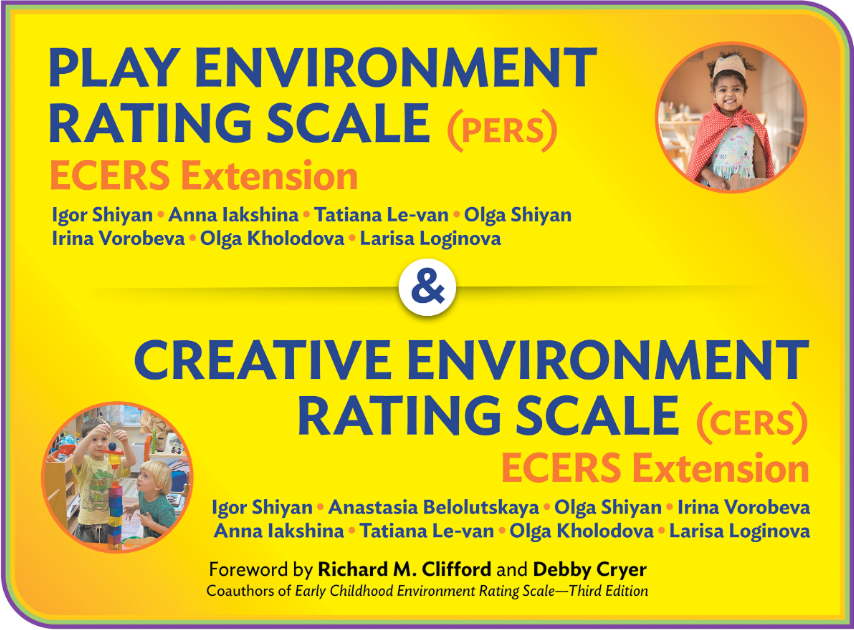
The ChildLab team is the developer of the ECEC quality assessment tools: the Play Environment Rating Scale (PERS) & Creative Environment Rating Scale (CERS) extensions to the internationally renowned Early Childhood Environment Rating Scale (ECERS-3).
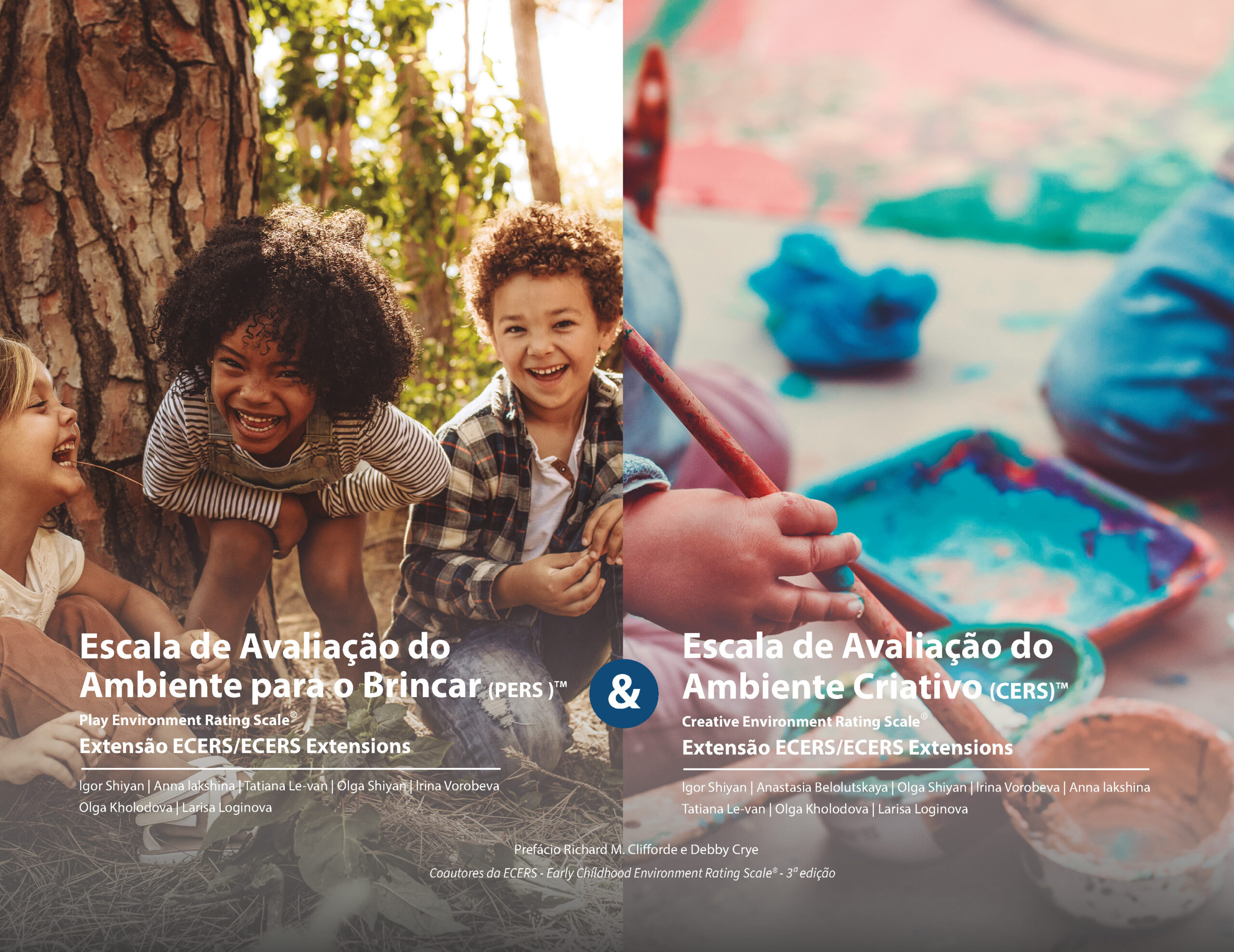
PERS & CERS are available in English and Portuguese.
PERS is a research-based scale designed to analyze and evaluate conditions to support mature (or developed) playthat nurtures young children’s imagination and contributes to the development of self-regulation, emotions, communication, social skills, cooperation among peers, speech, storytelling, and literacy. Mature play is also very important for school readiness, children’s self-esteem, learning motivation, and successful transition to school. Each item of the scale is focused on a specific and meaningful aspect of complex play support: space for play; program structure and free time for play; play materials; adult’s support of children’s play; and peer interaction.
CERS is a research-based scale designed to analyze and evaluate conditions to support the development of creative thinking and imagination in young children so that they can come up with new ideas, make discoveries, and solve nonstandard tasks. While most early childhood professionals know that encouraging creativity is important, many do not have the tools to do so on a day-to-day basis. CERS can be used as a formal assessment, and it can also serve as a tool for practitioner reflection on how to better support the development of creative abilities in preschool and kindergarten students. It measures both environmental provisions and teacher–child interactions that affect several areas: understanding the development processes; asking and supporting questions; being inventive and transforming contradictions; and using imagination.
The scales can be used for research and monitoring ECEC quality and for the professional development of preschool teachers.
“The development of these two new instruments provides a path to broadening and deepening the complex nature of the interplay of early childhood education and care programs, and the development of children in these settings” — from the Foreword by Richard M. Clifford and Debby Cryer, coauthors of Early Childhood Environment Rating Scale, Third Edition.
“Anyone who has benefited from the use of the Rating Scales will love these new tools. With growing evidence supporting play as the fundamental strategy for quality early learning, and creativity as a key skill for solving complex problems, the PERS and CERS empower educators to maximize opportunities for young children to thrive in a dynamic world” — Stephanie Olmore, Ed.D., Director, Early Learning and Global Partnership Engagement, National P-3 Center, University of Colorado Denver.
“Integrating play and creativity in education can shape a more hopeful future for both children and society. This book provides teachers with valuable insights on how to effectively incorporate these elements into the classroom, while also explaining their developmental benefits and offering practical evaluation guidelines for educators” — Ingrid Pramling Samuelsson, senior researcher, Department of Education, Communication and Learning, University of Gothenburg, Sweden.
“Using PERS and CERS in early childhood centers will reveal how the theories and research of Vygotsky can guide everyday practice. Used together, they will deepen practice and support creativity, problem-solving, and cognitive challenges in children’s play” — Kathy Sylva, professor of educational psychology, University of Oxford.
The ChildLab team provides training for experts and assessors in working with PERS and CERS, and we are always happy to facilitate research using the scales.
Play Environment Rating Scale (PERS) & Creative Environment Rating Scale (CERS): ECERS Extensions
PERS & CERS video presentation
In Portuguese: