![[EN] CHILD LAB](https://childlab.co.uk/wp-content/uploads/sites/4/2026/01/child-lab-logo.jpg)
What Does It Mean to Have Agency?
A person with agency sees a problem where others do not. They notice a contradiction or a mismatch—either between what is expected and what actually happens, or between what one is used to and what could be, at first only in their own idea. A person with agency not only sees a problem, but also dares to take initiative: to propose a solution, or at least to begin moving towards it; to come up with something new; to offer their idea to others—to speak up, persuade, and find allies; to bring the idea to life—comparing it with what actually happens (and often what does not work out, as discovering this gap is part of the “pains of creation”); to carry the work through to a result and present it to others.
A real-life example
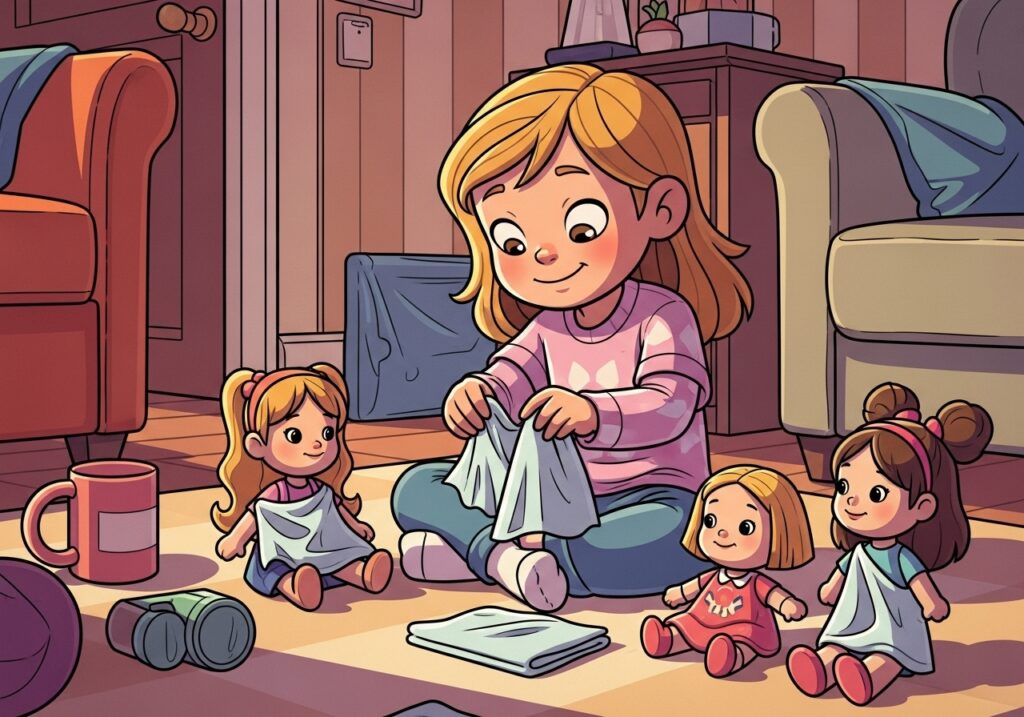
Masha (aged four) noticed that the dolls had no towels after their “bath”. Instead of crying, she took a napkin, glued a ribbon to it, and announced, “Here is their towel poncho!”
This is an example of agency in action:
saw a problem → found a non-standard solution → carried it out.
As we can see, developing agency requires:
- a great deal of trust in oneself—to allow oneself to notice contradictions and mismatches with expectations;
- a great deal of trust in others—to take initiative and involve them;
- a great deal of perseverance—to carry a task through to a tangible result.
That is why cognitive, communicative, and self-regulatory abilities are all needed for a person to develop agency.
Why Is This Important?
It is essential that, already in the preschool years, a child learns to relate to life actively and creatively—to become the author of their own life. These are not just fine words. Having agency means not only acting in accordance with existing rules and norms, but also being able to propose new ones: to invent, create, and take part in shaping social life. These very skills—the ability to notice a problem, suggest solutions, and bring them to life—form the foundation for critical thinking, leadership, and intrinsic motivation in adult life.
Creating something new is always difficult. It is much easier to rely on what already exists and to follow a path laid out by others. Having agency is harder—but it is also far more interesting.
One might object that, in everyday life, we do not encounter agency very often: many people believe that “initiative is punished”, that the world needs far fewer creators than performers, and that creative action is reserved for a select few. Yet these beliefs are the result of outdated social and educational models in which creative individuality was not seen as a priority.
Children’s Initiative Is Not the Same as a Whim
A whim is a demand: “I want!”—without proposing a solution.
Initiative, by contrast, sounds like: “Let’s do it this way!”
Supporting a child’s agency does not remove parental responsibility.
The adult remains responsible for safety, routines, boundaries, and values.
A child’s agency develops within these frameworks, not instead of them.
Agency Is the Foundation for:
- Critical and creative thinking (seeing a problem where others do not notice one);
- Leadership (being able to inspire others with an idea and find allies);
- Intrinsic motivation and resilience (coping with the “pains of creation” and not giving up at the first setback).
Myths About Agency
Myth 1: “Agency means disobedience and permissiveness”
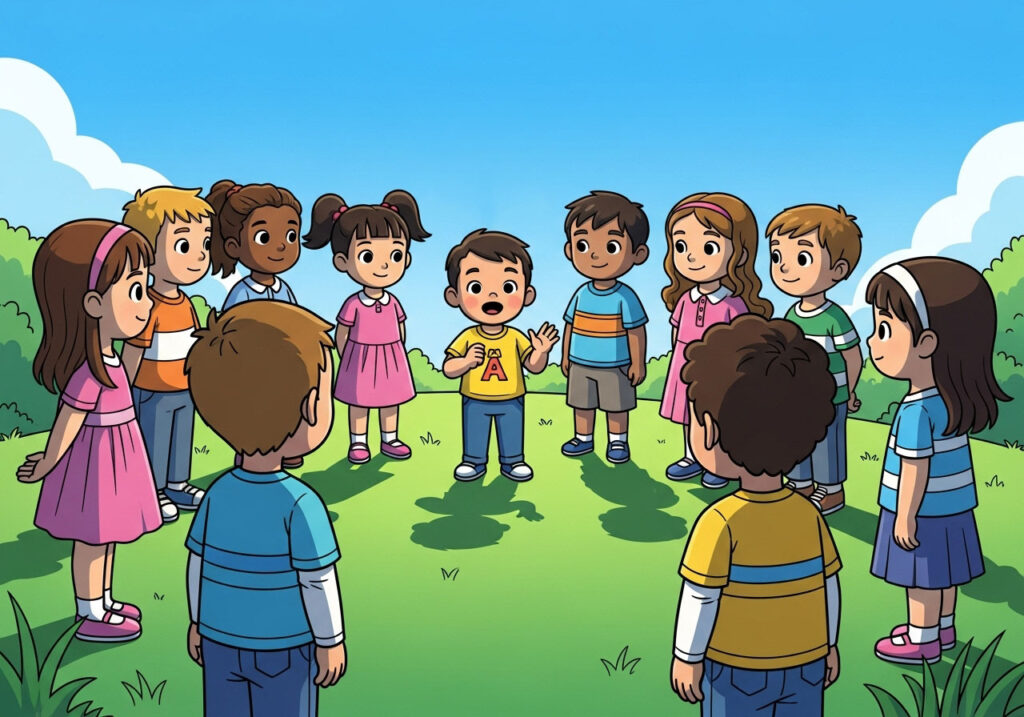
Reality: Having agency does not mean doing whatever one pleases. It means acting consciously, taking context and consequences into account. A child with agency may suggest a new rule in a game (“Let’s choose the leader with a counting rhyme today, not just randomly!”) while understanding that traffic rules or the daily routine are not negotiable. A whim is a demand; initiative is a proposal. The adult’s task is to help the child tell the difference and to guide their energy in a constructive direction.
Myth 2: “You either have it or you don’t. It’s an inborn trait”
Reality: Agency develops throughout life. It is not a fixed talent but a quality that can—and should—be nurtured by creating an environment in which a child can safely try things out, suggest ideas, make mistakes, and try again. If your child is afraid to voice an idea today, this is not a verdict; it is a point of growth.
Myth 3: “It’s too difficult for preschoolers. Let them do what adults say first; they’ll think for themselves later”
Reality: The desire to express oneself, to relate to the world, and to propose something new is natural for preschool children. Waiting until school age means missing a sensitive developmental period identified by psychologist Erik Erikson, who described initiative as a key achievement of the preschool years. Learning existing norms and gaining experience in creating new ones can—and should—go hand in hand.
Myth 4: “The world needs performers. Initiative is only punished”
Reality: It is true that many people believe initiative is punished. However, this belief reflects outdated models. The world our children will grow up in will value the ability to notice problems, think in non-standard ways, and take responsibility. Being the author of one’s own life is a foundation of psychological well-being.
Myth 5: “Developing agency requires grand projects and special conditions”
Reality: Agency is born and strengthened in small, everyday choices and decisions:
- choosing between an apple and a banana;
- deciding in what order to put toys away;
- placing a book on a different shelf because “it looks nicer there”.
What matters is creating everyday opportunities for children to express agency, rather than waiting for special occasions.

Myth 6: “A child with agency is inconvenient. They will argue and contradict”
Reality: Agency is about responsibility and dialogue, not conflict. Yes, such children ask questions (“Why are we doing it this way?”), but this is not defiance—it is genuine curiosity about how the world works. The adult’s role is not to assert authority, but to explain, discuss, and sometimes accept the child’s arguments. This is how a thinking person is raised.
Myth 7: “Agency is only needed for creative professions”
Reality: As Abraham Maslow argued, creativity is not limited to the arts. It is a creative approach to everyday problem-solving, relationships, and the organisation of time and space. Agency is essential for future scientists, engineers, entrepreneurs, doctors—for anyone who does not want to remain merely a cog in the system.
Can a Preschooler Have Agency?
Yes—but a preschool child is still young, largely dependent on adults, and often finds it difficult to make choices and decisions. Can we really speak of agency at this age? Preschoolers are also impulsive and still learning to regulate their behaviour, while agentic (subjective) action differs from impulsive, involuntary action in that it takes social context into account. A whim is not the same as initiative.
And yet, the desire to express oneself, to relate to the world in one’s own way, and to propose something new is entirely natural for preschool children. Learning existing norms and gaining experience in creating new ones can—and should—develop side by side.
Psychologist Erik Erikson believed that initiative is the key developmental achievement of the preschool years, provided that adults do not interfere with its formation through excessive criticism or blame. Otherwise, instead of (or alongside) developing an understanding of reality and respect for one’s own and others’ boundaries, the child may develop a sense of guilt that inhibits initiative.
Agency develops throughout life, and at each age it involves different developmental tasks. Accordingly, each stage of childhood requires its own conditions for agency to emerge and grow.
Reflect: How Does Your Child’s Agency Show Itself?
Answer these questions for yourself:
- Does your child often suggest a new rule for a game or a new way of doing something?
- Do they ask “Why is it like this?” or notice inconsistencies?
- Do they try to persuade you or other children of their idea?
- Do they follow through on a started task—even a small one—in order to show the result?
If this does not happen very often yet, that is completely normal.
Agency is not something a child is born with; it is cultivated. And the adult plays a key role in this process.
Agency is not an “all-or-nothing” quality.
There is no need to expect large-scale projects from a young child. Agency develops gradually, and it can be supported at any level.
How Do I Support My Child’s Agency?
Read each statement and choose the option that best describes your typical response.
- When your child is doing something independently very slowly (getting dressed, tying shoelaces) and you are in a hurry, you usually:
- Do it for them — it’s quicker and more correct.
- Wait patiently, even if it takes a long time.
- Offer help with the most difficult part and leave the final step to them (“Here — you tie the last knot yourself!”).
- Say, “I can see you’re trying. Try it this way — I’m here,” and observe.
- Your child suggests an unconventional idea (for example, adding a berry to their soup or building a house out of cushions) that seems strange to you. You:
- Calmly explain why this shouldn’t or can’t be done.
- Allow whatever they suggest — let them experiment freely.
- Show interest in their idea: “Tell me what you’ve come up with,” and suggest a safe way to test it (“Let’s try it on your plate”).
- Get enthusiastic and join in: “Great! Let’s see what happens.”
- When you give your child a task or chore, you usually:
- Clearly explain what to do and how to do it, step by step.
- Give complete freedom: “Tidy up the toys however you like.”
- Offer a simple choice: “Will you put away the blocks first or the cars?”
- Ask, “Where do you think it’s best to start? Let’s think of a plan together.”
- If, during play, your child suggests a new or unusual rule, you:
- Remind them of the established rules of the game.
- Allow them to set their own rules in their play.
- Ask, “That’s interesting — why do you want to play that way?” and try it out.
- Support and help develop the idea: “Great rule! Let’s suggest it to the others and play together.”
- When your child encounters a difficulty in a small project (a drawing doesn’t turn out, a tower collapses), you:
- Show them how to do it or do it for them so it works properly.
- Encourage them: “It’s all right, try again.”
- Show empathy and ask questions: “Oh, it fell! Why do you think that happened? How could we make it more stable?”
- Suggest exploring the cause together and finding different possible solutions.
- How often does your child have a real choice in everyday life (what to wear, what to have for snack from two options, which book to read)?
- Rarely — I know better what is useful and convenient.
- Often — I almost always ask their opinion.
- Regularly, but I offer a limited choice of two or three options that work for me.
- Very often, and we discuss the consequences of the choice together (“If you wear a T-shirt, it might be cool outside”).
- Your child wants to make a surprise for Grandma (a craft, a performance). Your role is usually to:
- Suggest a simple and nice idea so it will definitely turn out well.
- Take them to a room and leave them alone to create.
- Help gather the materials and ask, “Would you like my help, or do you want to do it yourself?”
- Become a co-author and “technical helper” at their request: “Tell me your plan, and I’ll help you make it happen.”
- Your child notices a contradiction (“Why is it called ice cream if you have to warm it up in your mouth?”) or asks “why?”. You:
- Give a direct and clear answer.
- Say, “Because that’s how it was invented.”
- Return the question: “What do you think? That’s an interesting puzzle!”
- Wonder together and suggest finding the answer in a book, through an experiment, or by asking an expert.
- If your child’s initiative ends in a mess or failure (spilled water during an “experiment”, scattered clothes while looking for a costume), your first reaction is to:
- Draw a conclusion: “See, that’s why you shouldn’t do that.”
- Shrug: “Oh well, it happens,” and tidy up.
- Acknowledge the effort: “You really wanted to do something interesting! Let’s deal with the mess together.”
- Discuss what could have been done differently and praise the courage to try.
- How do you relate to the role of “author of norms” — when your child suggests a new family rule (for example, “Let’s all kiss when we meet”)?
- Explain that adults set the rules.
- If the rule is harmless, allow them to use it in their games.
- Listen and discuss it seriously: “That’s interesting — would it be comfortable for everyone? Let’s try it for a day.”
- Treat such proposals as a valuable contribution and help adapt them to family life, taking everyone’s needs into account.
Scoring
For each answer, assign points:
- 1) = 1 point (acting for the child; focus on results and control)
- 2) = 2 points (freedom without boundaries or support)
- 3) = 3 points (supporting choice, shared discussion, scaffolding)
- 4) = 4 points (partnership, developing initiative, shared exploration)
Add up your total score.
10–18 points: “Organiser”
You provide clear structure and safety, which is important. However, your child more often follows your plans than creates their own.
Your next step: begin offering simple choices (“Red cup or blue cup?”) and ask for your child’s opinion more often: “What do you think?”
Practise at the level of Author of Choice.
19–26 points: “Observer”
You give your child freedom, but at times they may lack your active involvement and scaffolding for more complex tasks.
Your next step: engage more actively with your child’s ideas — not only allowing them, but asking about the intention behind them and offering help with carrying them out.
Practise at the level of Author of Ideas.
27–34 points: “Helper / Facilitator”
You balance freedom and support very well. You ask thoughtful questions and help with planning and overcoming difficulties. Your child feels that their ideas matter.
Your next step: more often take the position of an equal partner in your child’s projects, allow them to become an Author of Norms within the family, and explore their hypotheses more deeply.
35–40 points: “Co-author and Inspirer”
You have created an excellent environment for the development of agency. You are not afraid to experiment together with your child and respect them as a creator and rule-maker. You do not simply support initiative — you are inspired by it.
Keep going, document your experiences, and share them with other parents!
If you did not recognise yourself in the most “advanced” descriptions, this is neither a mistake nor a failure. All parents begin with control. Supporting agency is a journey, not a final destination.
Agency does not grow in leaps, but through small steps taken every day. Choose one micro-strategy from the level framework in this article and try it for a week. This is the most effective way to support a child as the author of their own life.
You do not need to “move up” to the next level all at once.
It is enough to choose one question or one micro-strategy and try it two or three times a week.
How to Support Children’s Agency
What to do—and what not to do
When a child wants to tie their shoelaces themselves but does it very slowly, adults often step in to save time. Phrases like “Let me do it—we’re late” may be efficient, but they block the child’s sense of agency. A more supportive response is to notice the effort, offer minimal help, and allow the child to complete the task independently.
When a child suggests mixing porridge and yogurt for breakfast, adults may react by correcting or rejecting the idea. Statements like “That’s not how people eat” discourage curiosity and initiative. Responding with interest and inviting the child to try the idea supports experimentation and self-expression.
When a child decides to build a tower from books instead of blocks, adults may focus on rules and restrictions. Simply forbidding the activity can limit creativity. A better approach is to discuss safety and care for the books while supporting the child’s idea and problem-solving.
A Levels Model and Micro-Steps for Support
At the first level, the child acts as the author of a choice. The adult offers simple, limited options, and the child chooses between them. This may include everyday decisions such as selecting clothes or choosing which book to read. Clear and manageable choices help the child practice decision-making in a safe and supportive way.
At the second level, the child becomes the author of an idea. The child begins to propose their own solutions in familiar situations. The adult’s role is to notice these ideas, express interest, and encourage exploration. Simple responses that validate the idea and invite reflection help strengthen initiative and confidence.
At the third level, the child acts as the author of a project. The child sets a small goal and takes steps toward completing it, such as building something unusual or preparing a performance. The adult supports planning by asking guiding questions, helping structure the process, and recognizing the result as the child’s own project.
At the fourth level, the child becomes the author of a norm. The child suggests new rules for shared activities or family life. Instead of rejecting these proposals, the adult discusses them and tests how they work in practice. This helps the child understand shared responsibility and the impact of rules on others.
Everyday Tips
Children’s agency develops through the leading activities of this age: play and experimentation.
Agency grows if a child has daily opportunities:
- for play (space, time, partners—peers and others—and play materials);
- for experimentation (space, time, partners—peers and others—and materials).
Instead of “Hurry up, do it like I do,” ask:
“What do you think needs to be done?”
“Do you want to do it yourself, or should I help?”
“That’s a great idea—let’s try your way.”
A 7-Day Challenge
Support five of your child’s initiatives over seven days, no matter how small they may be.
How Can I Tell That Changes Are Happening?
Changes in you, the parent
Emotions and reactions
- Less “autopilot.”
You catch yourself saying, “Let’s think about how to do this safely,” instead of “Don’t touch!” - A pause instead of a reaction.
A brief pause appears between your child’s whim and your irritation. You manage to ask yourself, “Is this a whim or an initiative?” - Joy in the process.
You begin to value not only the perfect result (a neat drawing), but the process itself: concentration, experimenting with colour, discussing the idea. - Less guilt.
You realise that your task is not to control every step, but to create conditions for growth. This eases the burden of constant responsibility.
Behaviour
- You ask questions instead of giving instructions.
“Where do you think this could go?” instead of “Put it back.” - You organise the environment.
You clear a low shelf for your child’s work and keep creative materials within easy reach. - You share successes differently.
You want to talk not about grades or results, but about an interesting problem your child noticed today—and how they tried to solve it.
Changes in the child (preschool age)
In speech and thinking
- “I-statements” appear.
“I want to try…,” “I think that…,” “Let me come up with something!” instead of only “Give it to me!” or “I want!” - “Why?” and “What if?” questions.
The child does not only ask, but begins to hypothesise and explore cause-and-effect relationships. - Argumentation emerges.
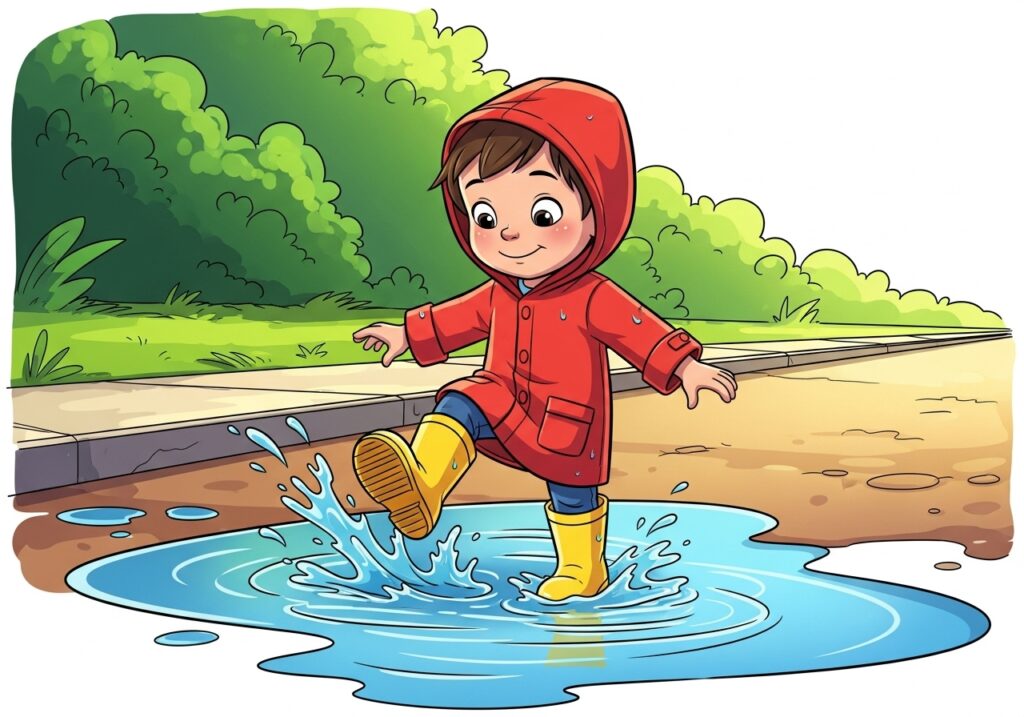
“I want to wear wellington boots because there are puddles outside and I want to splash in them,” rather than simply “I want these!”
In actions
- Impulse control.
The child can briefly postpone “I want it now” in order to reach another goal (“I’ll finish colouring first, then I’ll watch a cartoon”). - Proposing solutions in conflicts.
“Let’s take turns with the cars every five minutes” — an attempt to create a new rule. - Following through.
It becomes important not only to start building a garage from blocks, but to add the gates and “park” all the cars in order to show you a finished piece of work. - Play becomes more complex.
Story play includes more complex rules, roles, and elements of planning (“Today we’re not just a shop — we’re an expedition for secret goods”).
The Main Indicator for Both
Interaction becomes less like command and obedience and more like co-operation and an engaging dialogue.
You are not just raising a child — you are watching an independent personality grow, and this brings a deep sense of parental confidence and joy.
Instead of a Conclusion
Agency is a superpower for life in the modern world.
And this power is born in childhood, in the safety of your unconditional love and support.
You, too, have the right to make mistakes, to doubt, and to feel tired.
A child’s agency grows alongside a real, developing adult — not a perfect one.
What to read?
Books for parents (all ages)
- Gopnik, A. (2020). The gardener and the carpenter: What the new science of child development tells us about the relationship between parents and children. Farrar, Straus and Giroux.
- Gopnik, A. (2009). The philosophical baby: What children’s minds tell us about truth, love, and the meaning of life. Farrar, Straus and Giroux.
- Rogoff, B. (2003). The cultural nature of human development. Oxford University Press.
- Vygotsky, L. S. (1978). Mind in society: The development of higher psychological processes (M. Cole et al., Eds.). Harvard University Press.
- Pink, D. H. (2009). Drive: The surprising truth about what motivates us. Riverhead Books.
- Brown, B. (2018). Dare to lead: Brave work. Tough conversations. Whole hearts. Random House.
Preschool age (3–5 years)
- Montessori, M. (1967). The discovery of the child. Ballantine Books.
(Original work published 1948) - Lillard, A. S. (2017). Montessori: The science behind the genius (Updated ed.). Oxford University Press.
- Bronson, M. B. (2000). Self-regulation in early childhood: Nature and nurture. Guilford Press.
- Beaty, A., & Roberts, D. (2016). Ada Twist, scientist. Abrams Books for Young Readers.
- Beaty, A., & Roberts, D. (2013). Rosie Revere, engineer. Abrams Books for Young Readers.
- Beaty, A., & Roberts, D. (2013). Iggy Peck, architect. Abrams Books for Young Readers.
Early school age (6–9 years)
- Tough, P. (2012). How children succeed: Grit, curiosity, and the hidden power of character. Houghton Mifflin Harcourt.
- Kohn, A. (1999). The schools our children deserve: Moving beyond traditional classrooms and “tougher standards”. Houghton Mifflin.
- Cole, J., & Degen, B. (1985–). The magic school bus (Book series). Scholastic.
- Tulley, G., & Spiegler, J. (2009). Fifty dangerous things (you should let your children do). Plume.
Books for joint reading and shared activities (all ages)
- Plaid, W., Mernit, J., & Crowley, M. (2012). Unbored: The essential field guide to serious fun. Bloomsbury.
- Tulley, G., & Spiegler, J. (2009). Fifty dangerous things (you should let your children do). Plume.
- Cole, J., & Degen, B. (1985–). The magic school bus (Book series). Scholastic.